See the Barrier
People cannot remove a barrier that an organisation refuses to recognise.

Commonwealth Boxing Champion | Former England Footballer | BBC Broadcaster | TED Speaker | Founder of Pave The Way
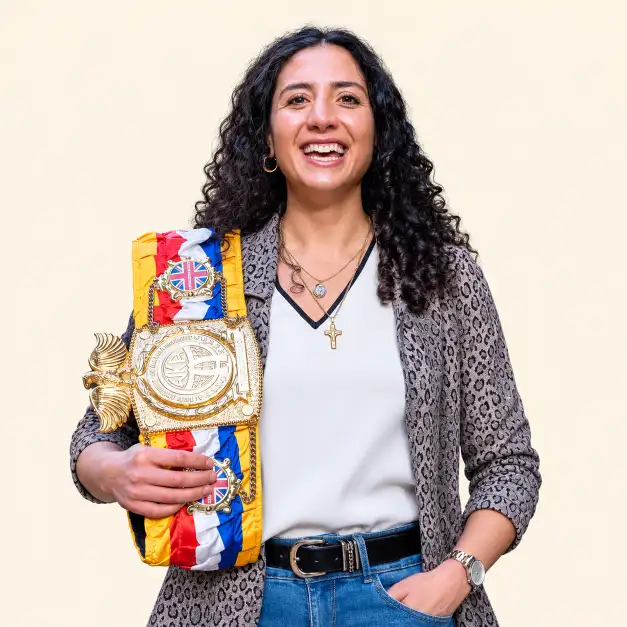
Stacey Copeland is a former international footballer, Commonwealth boxing champion, broadcaster, commentator, two-time TED speaker, campaigner and founder of the Pave The Way charity.
Her career is unusual not simply because she reached elite level in two sports, but because much of her journey took place in environments where girls and women were still fighting for the right to participate on equal terms.
As a child she loved boxing but discovered that the competitive route available to the boys around her was not open to her. Football became the pathway through which she first represented England.
Years later she returned to boxing, represented England and Team GB, won three national amateur titles, became a European silver medallist and then made history as the first British woman to win a Commonwealth professional boxing title.
Today Stacey uses those experiences across broadcasting, speaking, education and charity work to explore equality, confidence, gender stereotypes, belonging, performance anxiety, adaptability and what practical inclusion actually looks like.
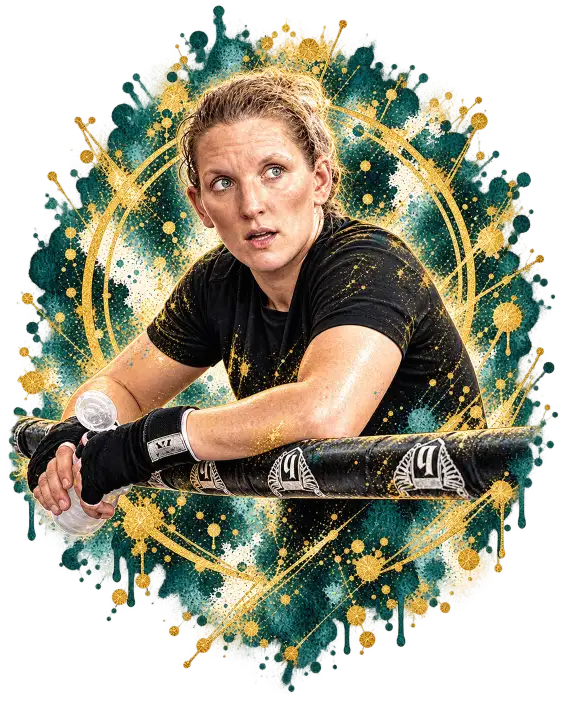
Stacey Copeland was born on 19 August 1981.
Public sporting biographies record London as her birthplace, while her life and sporting identity became closely rooted in Greater Manchester.
Tameside Sports Network records that Stacey has lived in Tameside since she was ten years old.
She attended after-school sports sessions at Godley Primary School and holiday activities at Hyde United while pursuing an early love of football.
Stacey's connection with boxing began much earlier than her competitive boxing record suggests.
Her father, Eddie Copeland, was a boxer and her grandfather ran a boxing gym in Bredbury.
Stacey has described being around that gym from approximately seven years old.
Boxing was not a novelty in the Copeland family.
Manchester boxing sources describe Stacey as the third generation of the family to enter the ring.
Stacey has recalled asking her grandfather about becoming a registered boxer and learning that girls were not allowed to compete in the way boys were.
The experience became one of her earliest encounters with a barrier created by gender rather than ability.
Stacey has spoken openly about comments she experienced growing up because her interests did not fit traditional expectations about girls.
One comment might seem insignificant.
Repeated often enough, however, small comments can change how somebody understands themselves.
Stacey has described this using the idea of “death by a thousand cuts”: repeated messages that individually seem small but collectively affect confidence and belonging.
Stacey has credited her grandfather with holding unusually progressive views about gender for his generation.
He encouraged the women in the family to pursue practical, sporting and professional interests without defining what they should do according to gender.
Stacey therefore experienced two messages simultaneously.
At home she was taught: you can do what you are capable of doing.
Outside that environment she frequently encountered: girls do not do that.
Much of her later work has been about closing the gap between those two messages.
Stacey has told the story of breaking her shoulder after attempting a move inspired by The Karate Kid.
The injury interrupted boxing activity.
During that period Stacey discovered that Stockport County had a girls' football team.
Football gave her something boxing could not yet provide: an organised competitive pathway.
Stacey has described arriving at football training and meeting other girls who were equally passionate about the sport.
It gave her a sense of belonging.
She no longer had to justify why a girl wanted to compete. The other players already understood.
The Football Association was developing stronger structures around women's football.
That meant teams, competitions and a route to progress were becoming visible.
Stacey naturally moved towards the sport in which a pathway actually existed.
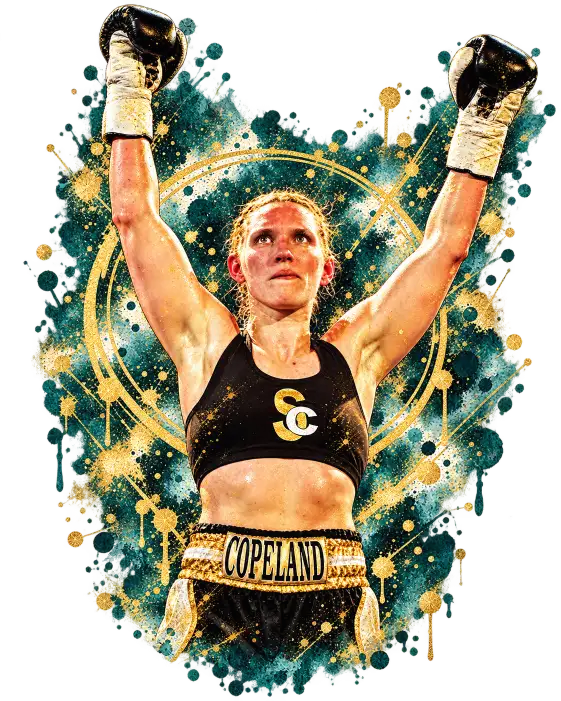

Stacey progressed far enough to represent England at Under-18 level.
She has described the pride of standing in the England line-up while also remembering how comments from people outside women's football had made her question whether the achievement was somehow less important.
Stacey's official football biography records appearances in the top levels of the English women's game for clubs including:
She played in the first women's Charity Shield final when Doncaster Belles faced Arsenal.
Her football achievements also include reaching an FA Cup final.
Stacey received athletic scholarship opportunities in the United States, with experience in Texas and South Carolina.
Her official profile records Peach Belt and Lone Star Conference recognition as part of that American chapter.
She later played in Stockholm for Vasalunds FC.
Playing abroad exposed Stacey to different sporting cultures and strengthened a lesson that appears repeatedly in her speaking:
talent does not operate in isolation; environment affects whether talent gets the chance to grow.
By the time Stacey returned seriously to boxing, the sport had changed dramatically.
The legal and institutional battles fought by pioneers such as Jane Couch had opened competitive opportunities that Stacey had been denied as a girl.
Stacey was already an experienced athlete but a late starter in competitive boxing.
Boxing News has recorded that despite being around a boxing gym from childhood, she did not have her first competitive boxing bout until approximately age twenty-nine.
Football could not teach Stacey how to box.
It had, however, already taught her about conditioning, competition, coaching, recovery, teamwork and performing when the result mattered.
When Stacey began winning national boxing titles, she was also continuing a family tradition.
Her father Eddie had himself won major amateur honours.
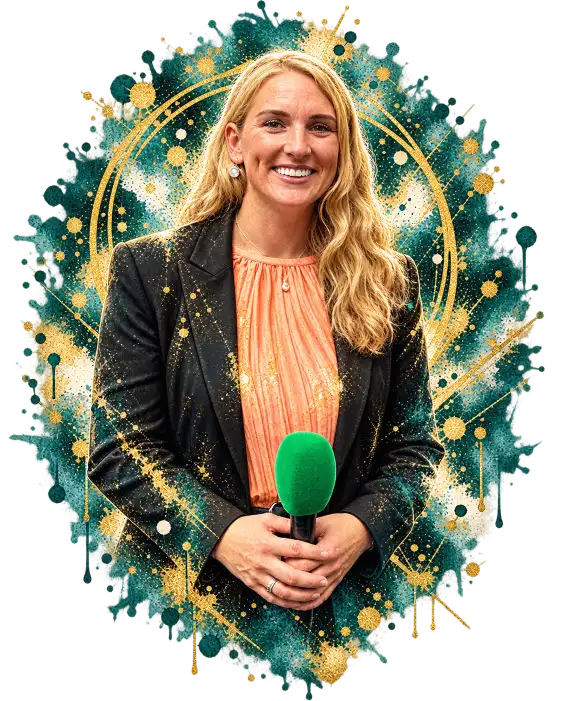
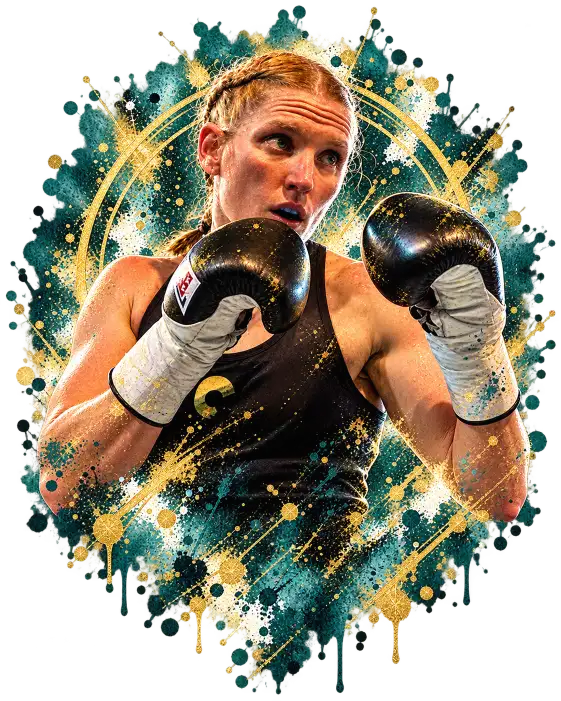
Stacey went on to represent her country in boxing as well as football.
Her official sporting record lists both England and Team GB representation.
Stacey became a three-time National ABA Champion.
She won a Multi Nations tournament in Serbia and was also named best boxer of the tournament.
Stacey became a two-time Haringey Box Cup champion.
She also won the Swedish International Box Cup twice.
At the Women's European Championships in Bucharest, Stacey reached the 69kg final.
She finished with European silver after facing Elena Vystropova.
Representing the country in two different sports gave Stacey a rare perspective on performance environments.
Talent remained important in both.
But culture, opportunity and perceptions around women could feel very different depending on the sport and the moment in history.
Stacey made her professional debut against Borislava Goranova in Manchester.
She won on points.
Stacey followed the debut by defeating Ester Konecna on points in July 2017.
In November she stopped Klaudia Vigh in round two.
A first-round stoppage of Dora Tollar in March 2018 moved Stacey to 4–0.
Stacey then travelled to Zimbabwe to challenge South Africa's Mapule Ngubane for the inaugural Commonwealth female super-welterweight championship.
Stacey won by unanimous decision after ten rounds.
Reported judges' scores were 98–91, 98–93 and 97–92.
The victory made Stacey the first British woman to win a Commonwealth boxing title.
The Ngubane fight became the final contest of Stacey's professional record.
She finished professional boxing undefeated at 5 wins and 0 defeats, with two stoppage victories.
Stacey announced her retirement from professional boxing in 2021.
Her competitive professional record remained perfect: 5–0.
Leaving competitive sport can create a difficult transition.
Athletes spend years measuring progress through training, selection, competition and objective results.
Retirement removes that familiar framework.
Stacey had begun building her work in equality, communication, education and broadcasting before her boxing retirement.
That meant the next chapter was not an attempt to replace sport with something unrelated.
It was an opportunity to apply what sport had taught her to a wider audience.
The focus moved increasingly from what Stacey could achieve herself to what barriers could be removed for other people.
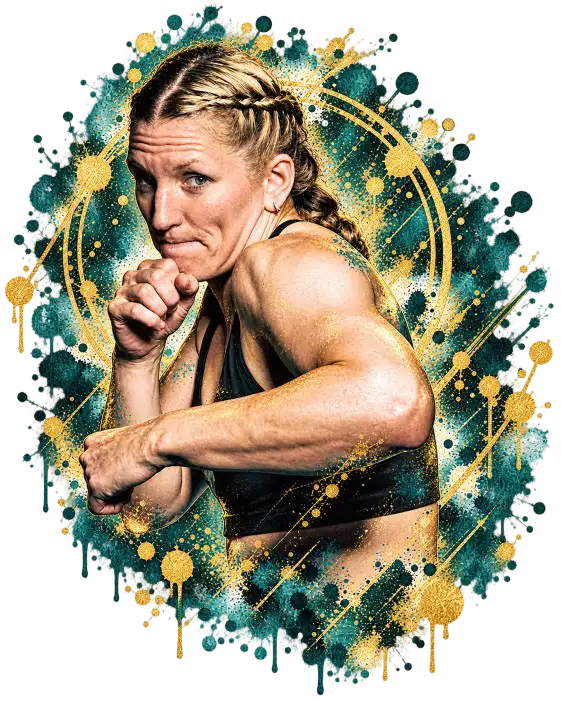
Stacey established Pave The Way in 2017.
What began as work focused on highlighting women in sport developed into a wider movement around gender stereotypes.
Pave The Way later gained registered charity status.
Its current registered charity number is 1188954.
The charity states its mission as:
challenging gender stereotypes of girls, boys, men and women to lift barriers to human potential.
Stacey's equality work deliberately includes the ways stereotypes can restrict boys and men too.
Traditional expectations about confidence, emotion, careers, parenting, appearance and sport can reduce opportunity for everybody.
Visibility matters.
But Stacey's work goes further than telling young people to be confident.
It asks adults, employers, educators, media and institutions to examine the messages and structures that shape what young people believe they are allowed to become.
Stacey's TEDxManchester talk brings together childhood, football, boxing, stereotyping and the thinking behind Pave The Way.
Stacey has delivered two TED-format talks.
Her earlier TEDxRNCM presentation, A Fighter's Guide to Performance Anxiety, explores the internal pressure behind public performance.
Medals and external confidence do not remove anxiety.
Performance environments often increase it because the athlete knows exactly how much preparation has gone into a single visible moment.
Pressure can sharpen preparation and attention.
It can also become destructive when internal narratives overwhelm the ability to perform.
The boxing ring is dramatic, but the underlying mechanism is familiar to anybody preparing for:
Confidence becomes more sustainable when people learn to perform with nerves rather than waiting for nerves to disappear.
Stacey has worked as a broadcaster with BBC Radio Manchester since 2018.
Her official media profile records experience presenting the late show and later hosting or contributing to programmes including:
Stacey has presented live from Wembley for major men's and women's football occasions and has covered matches from venues including the Etihad and Old Trafford.
She has anchored boxing fight-night coverage for BBC Radio 5 Live.
Stacey's official biography identifies her as a lead boxing commentator for FightZone TV.
Her commentary work has included British, Commonwealth and European professional title fights.
She has also worked across Sky Sports boxing coverage as a presenter and pundit.
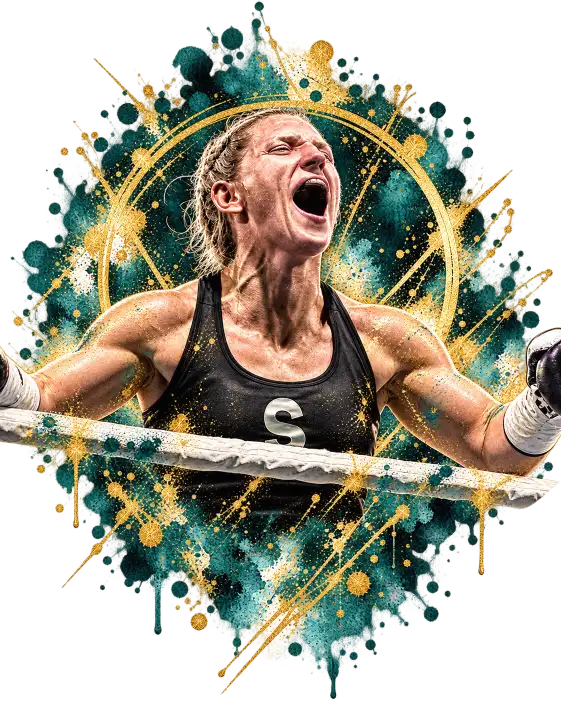

Stacey's current official profile describes her as a freelance broadcaster, presenter and commentator working across outlets including the BBC and FightZone.
She presented the Paving The Way sports series for Granada ITV, interviewing women in sport from the North West.
Stacey featured in the documentary Game On: The Unstoppable Rise of Women's Sport.
The documentary was later a finalist at the Broadcast Sport Awards.
Stacey has taken her equality message beyond sport and broadcasting into international policy environments, including speaking at the European Parliament in Brussels.
She has also spoken at the United Nations in Geneva about women in sport.
Her public-speaking experience spans major organisations as well as settings where access to role models and personal stories may be particularly powerful.
Her official site records talks for businesses, schools, prisons and community groups.
Football, boxing, radio, television and keynote speaking all use different skills.
What connects them is the ability to communicate under pressure and create a meaningful connection with other people.
People cannot remove a barrier that an organisation refuses to recognise.
“That's just how it is” is often the sentence that allows an outdated system to survive.
Stacey's move into girls' football showed what happens when somebody finally reaches an environment where participation does not require constant explanation.
Confidence grows through preparation, experience and repeated evidence that difficult situations can be handled.
Football, boxing, broadcasting and campaigning required different skills without requiring Stacey to abandon her core values.
People expand their idea of what is possible when they can see somebody like them already occupying the space.
Small comments, labels and assumptions communicate who an environment believes belongs there.
Personal achievement becomes more meaningful when it makes the next person's route easier.
Moving inclusion away from policy language and into the everyday opportunities, messages and behaviours people experience.
Understanding how expectations about women, men, girls and boys quietly shape confidence and opportunity.
Why talent is easier to express when people no longer spend energy proving they deserve to be in the room.
Building confidence through action and preparation rather than waiting until self-doubt disappears.
Managing nerves, internal pressure and the fear of public failure when performance matters.
Recovering from rejection, injury, stereotypes and disappointment without pretending they have no emotional impact.
Moving from football to boxing to broadcasting while transferring the best learning from each environment.
Visibility, authenticity and creating pathways in environments historically dominated by men.
Why visible examples can alter what children and adults believe is realistically available to them.
Turning frustration with an unfair system into practical actions that improve the environment.
Lessons from broadcasting and speaking about clarity, listening, storytelling and connecting with very different audiences.
What two elite sports taught Stacey about preparation, standards, feedback and performing under pressure.
Stacey Copeland is born in England; public sporting biographies record London as her birthplace.
Grows up around the sport through father Eddie and her grandfather's boxing gym.
Begins spending time around her grandfather's gym in Bredbury.
Tameside Sports Network records Stacey living in the area from this age.
Discovers that the boxing pathway open to boys is not yet available to her.
Finds organised girls' football and a competitive sporting pathway.
Develops through elite club environments.
Represents England at youth international level.
Competes within the top levels of the women's game.
Plays for Manchester City's women's side.
Plays for one of the historic names in English women's football.
Features in the first women's Charity Shield final.
Reaches a major domestic final.
Takes her football career into American collegiate and semi-professional environments.
Plays in Stockholm and adds another international sporting environment to her experience.
Finally begins the competitive boxing career that was unavailable in childhood.
Represents her country for a second sport.
Becomes a three-time national champion.
Wins international gold and best-boxer honours in Serbia.
Reaches the 69kg final at the Women's European Championships in Bucharest.
Continues the family boxing tradition by winning elite domestic amateur honours.
Starts the initiative that develops into a registered gender-equality charity.
Defeats Borislava Goranova on points in Manchester.
Beats Ester Konecna.
Delivers A Fighter's Guide to Performance Anxiety.
Stops Klaudia Vigh in round two.
Stops Dora Tollar in round one.
Begins her ongoing broadcasting relationship with the BBC station.
Defeats Mapule Ngubane in Harare over ten rounds.
Becomes the first British woman to win a Commonwealth boxing title.
Develops further into television presenting and sports broadcasting.
Delivers Why Gender Should Never Be a Barrier to Human Potential .
The equality initiative develops into a registered charity.
Ends professional competition with an unbeaten 5–0 record.
Expands broadcasting, presenting and commentary work.
Anchors major boxing fight-night radio coverage.
Works across boxing presentation and punditry.
Presents BBC Radio Manchester coverage from major football finals and semi-finals at Wembley.
Features in Game On: The Unstoppable Rise of Women's Sport.
Speaks in Brussels about women in sport.
Takes the equality conversation to Geneva.
Works across broadcasting, commentary, public speaking, charity leadership and gender-equality advocacy.
Stacey Copeland is a former England youth footballer, European amateur boxing silver medallist, undefeated professional boxer, Commonwealth champion, broadcaster, commentator, TED speaker and founder of Pave The Way.
Stacey Copeland was born on 19 August 1981.
Stacey has strong Greater Manchester roots and Tameside Sports Network records her living in Tameside from the age of ten. Her family's boxing gym was in Bredbury.
Yes. Her father Eddie Copeland boxed and her grandfather ran a boxing gym. Stacey spent time around that environment from childhood.
Stacey loved boxing as a child but competitive opportunities for girls were not available to her in the way they were for boys. Girls' football offered an organised competitive pathway and became her first elite sporting career.
Yes. Stacey represented England at Under-18 level.
Her official football biography includes Manchester City, Doncaster Belles and Tranmere Rovers, along with experience in the United States and Vasalunds FC in Sweden.
Yes. Stacey's official boxing record includes representing England and Team GB.
Stacey was a three-time National ABA Champion, European silver medallist, Multi Nations gold medallist and winner of Haringey and Swedish international tournaments.
Stacey made her professional boxing debut on 16 June 2017.
On 13 July 2018 in Harare, Stacey defeated Mapule Ngubane to become the first British woman to win a Commonwealth boxing title.
Stacey finished professional boxing undefeated with five wins, no losses and two stoppage victories.
Stacey retired from professional boxing in 2021.
Pave The Way is the charity Stacey founded to challenge gender stereotypes affecting girls, boys, women and men and to remove barriers to human potential.
Yes. Stacey has worked with BBC Radio Manchester since 2018 and has also anchored boxing coverage for BBC Radio 5 Live.
Yes. Her current official media profile lists professional boxing commentary work including FightZone and BBC platforms.
Stacey has delivered two TED-format talks: A Fighter's Guide to Performance Anxiety and Why Gender Should Never Be a Barrier to Human Potential.
Yes. Her official speaker biography records talks at both the United Nations in Geneva and the European Parliament in Brussels.
Her topics include equality, inclusion, breaking gender stereotypes, belonging, confidence, performance anxiety, resilience, adaptability, role models and positive change.
Stacey is suited to corporate conferences, leadership programmes, DEI and inclusion events, women's networks, sports conferences, schools, employee networks, awards events and fireside conversations.
Contact The Immersion Project using the contact page or email sue@theimmersionproject.co.uk .
This profile has been built using Stacey's official website, boxing governing-body material, interviews, current charity information and established sports sources.
Stacey's story demonstrates what happens when somebody has the talent and motivation to participate but the environment sends repeated signals that they do not belong.
It also shows what becomes possible when people challenge those assumptions.
Her talks connect sport, broadcasting and social impact around one practical question: what opportunities are people missing because of assumptions we have stopped noticing?
Explore Sports & High-Performance Speakers , discover Corporate Events , view Training Programmes , explore Inspirational Speakers , or browse all speakers .