Citizen of Honour
In March 2025, Liverpool awarded Natasha the title of Citizen of Honour.
The city's citation recognised her Olympic representation, her role as an inspiration to young women and her youth, education and charity work.

Olympian | Two-Weight World Champion | Boxing Manager | Broadcaster | Leadership & Resilience Speaker
Natasha Paula Jonas MBE is an Olympian, two-weight world champion boxer, former unified champion in two divisions, boxing manager, broadcaster, community advocate and inspirational speaker.
She became the first British woman to qualify for an Olympic boxing tournament and the first British female boxer to compete at an Olympic Games when she represented Team GB at London 2012.
That achievement was only one chapter. Natasha's wider journey contains a lost football career, sporting reinvention, Olympic disappointment, amateur retirement, motherhood, a professional comeback, an early professional defeat, two painful world-title near misses and an extraordinary late-career run that eventually made her unified world champion.
For organisations, Natasha brings an unusually complete story about resilience, representation, pressure, authentic leadership, working motherhood, reinvention and what it means to go first when there is no established path to follow.


Natasha Paula Jonas was born on 18 June 1984 in Liverpool and grew up in Toxteth.
She came from a large, close family in an area that carried plenty of external assumptions about what its young people could and could not become.
Natasha has recalled growing up surrounded by siblings and older cousins, joining in with whatever they were doing: climbing trees, riding bikes and playing sport.
Her family participated in martial arts and she was exposed to boxing through her father's gym, even when opportunities for girls in the sport were extremely limited.
Natasha remembers watching the 1988 Olympic Games when she was around four years old and telling her mother that she wanted to be there one day.
At that stage, however, boxing was not the route she imagined taking.
Natasha has also spoken publicly about a teacher who challenged her behaviour at school by explaining that leadership was demonstrated through conduct, not simply ability.
She has since used that experience when speaking to young people about the influence one teacher, coach or mentor can have on a person's direction.
Football became Natasha's first serious sporting ambition.
She has described being selected last when playing with boys simply because she was a girl — and learning that she had to become noticeably better before some people would accept her.
That experience would later feel familiar when she entered a boxing environment that had traditionally been built around men.
Natasha became a strong enough footballer to earn a scholarship in the United States.
Her ambitions were enormous. She has said that she imagined becoming the next Mia Hamm and playing at the highest level.
A serious knee injury in America ended the football future she had planned.
Natasha returned to Liverpool without the sporting identity around which she had organised much of her life.
She later described herself at that point as overweight, unemployed and back at her grandmother's home in Toxteth.
Back in Liverpool and searching for direction, Natasha was encouraged by trainer Sylvia Singleton to attend a women's session at Rotunda Amateur Boxing Club.
She initially saw boxing as exercise rather than the beginning of a second elite-sport career.
Natural athleticism, years of competitive sport and a strong appetite for training accelerated her development.
Natasha has recalled winning her early contests quickly and soon being selected for England.
She became a five-time ABA national champion and developed into one of Britain's leading amateur female boxers.
Natasha won gold at the Women's European Union Amateur Championships in Bulgaria in 2009.
That same period saw her become the first female boxer to represent GB Boxing.
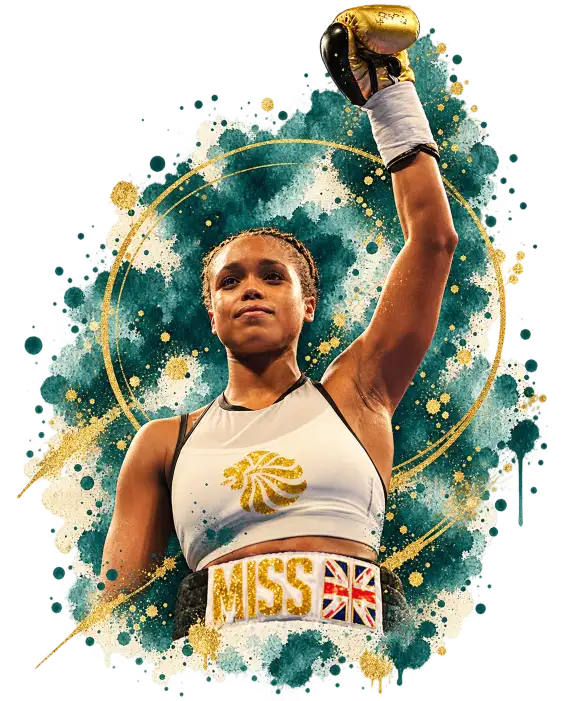

Natasha won light-welterweight bronze at the 2011 European Championships.
Qualification for London 2012 depended on performance at the Women's World Championships in Qinhuangdao, China.
Natasha reached the semi-finals, secured a world bronze medal and, more importantly for British sporting history, became the first British female boxer to qualify for an Olympic Games.
When Natasha entered the ring against Quanitta Underwood of the United States at London 2012, she became the first British woman ever to contest an Olympic boxing bout.
She won 21–13.
The victory created a quarter-final with Ireland's four-time world champion Katie Taylor.
Taylor won 26–15 and would go on to take Olympic gold.
The atmosphere became part of Olympic folklore: Team GB later recorded the contest at 113.7 decibels, the loudest crowd measurement of London 2012.
Natasha, Nicola Adams and Savannah Marshall were part of the first British women's Olympic boxing generation.
Their presence helped turn an activity many girls had barely been able to access into an Olympic pathway young women could actually see.
In 2014 Natasha added European Championship silver to her international amateur record.
Women's boxing appeared at the Commonwealth Games for the first time in Glasgow.
Natasha entered as one of England's medal hopes but suffered a foot injury in her opening bout and lost a close split decision to eventual champion Shelley Watts.
Natasha announced her retirement from amateur boxing in April 2015.
At that moment she was a five-time national champion, world medallist, European medallist and Olympic history-maker.
But women's professional boxing in Britain offered nowhere near the opportunity it would offer only a few years later.
She believed the elite boxing chapter had ended.
After stepping away from amateur boxing, Natasha became a mother.
She has spoken openly about a difficult labour, a premature delivery and ultimately requiring a caesarean section.
Motherhood changed the emotional relationship Natasha had with sporting results.
Before becoming a parent, a training session or fight result could dominate everything.
Afterwards, she found that walking through her front door required her to leave the gym behind and simply be Mum.
Natasha has repeatedly connected that separation with a healthier perspective on elite sport.
It also gives her speaking work relevance beyond athletes: working parents across every industry recognise the tension between ambition, responsibility, guilt, boundaries and limited time.
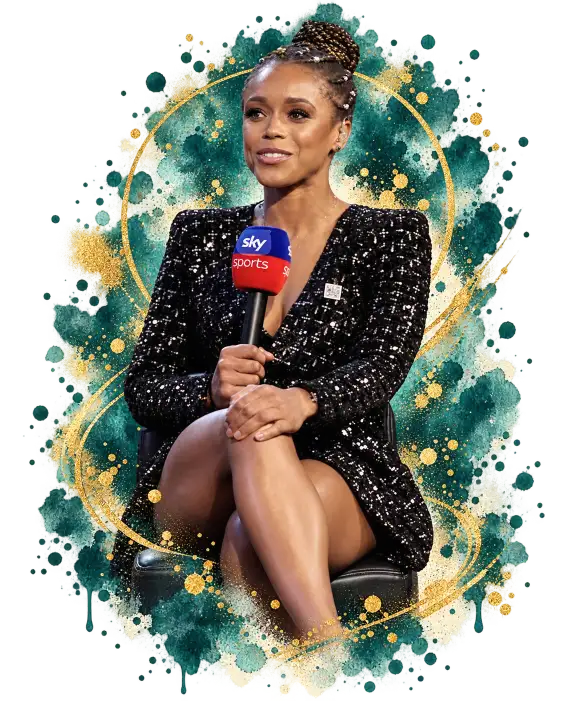
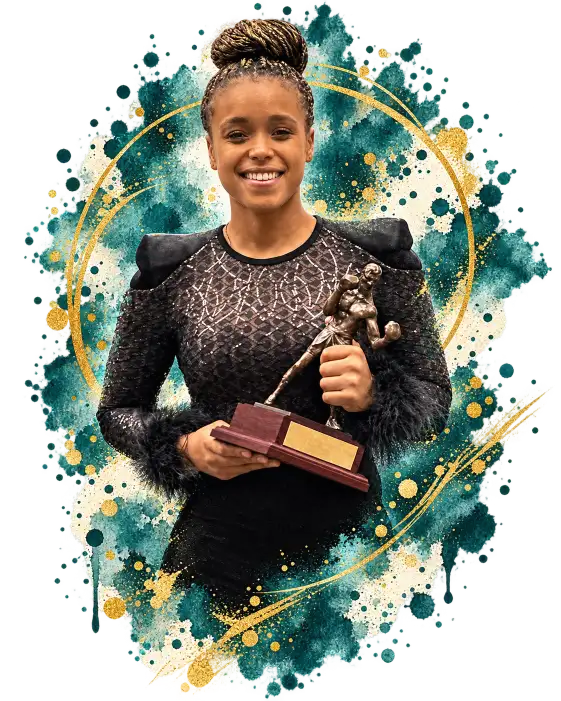
Natasha made her professional debut against Monika Antonik in Newcastle.
She won inside the first round.
The comeback required Natasha to rebuild an athlete's body and routines while adjusting to the responsibilities of motherhood.
She has also spoken about how differently she was sometimes treated after becoming a mother and how assumptions around pregnancy, childcare and elite female sport affected her.
The professional journey then suffered its first major setback.
Viviane Obenauf dropped Natasha twice and stopped her in the fourth round in Cardiff.
The defeat left Natasha at 6–1 and without her WBA International super-featherweight title.
Natasha later described questioning herself after that defeat.
Instead of accepting it as the final chapter, she decided that she still had something meaningful to prove.
Natasha challenged undefeated WBC super-featherweight champion Terri Harper at Matchroom Fight Camp.
The ten-round contest ended in a split draw: one judge scored for Natasha, one for Harper and the third had the fight level.
Harper retained the championship.
For Natasha, it proved that she could perform at world-title level — while still leaving the central ambition unfinished.
Nine years after their Olympic quarter-final, Natasha challenged Katie Taylor again, this time for the undisputed professional lightweight championship.
The fight was extremely close.
Taylor won by unanimous decision with scorecards of 96–94, 96–95 and 96–95.
Natasha had now challenged for a professional world title twice without winning one.
At thirty-six, the easy conclusion was that the opportunity might have passed.
Instead of continuing to chase the same opportunities at lower weights, Natasha accepted a dramatic move to super-welterweight.
The decision became one of the defining reinventions of her career.
In Liverpool, Natasha stopped former world champion Chris Namús in the second round to win the vacant WBO super-welterweight world championship.
At thirty-seven, on her third attempt at winning a professional world title, she was finally world champion.
Natasha then defeated unbeaten WBC champion Patricia Berghult by unanimous decision in Liverpool.
She was now a unified champion.
She completed an extraordinary year by defeating IBF champion Marie-Eve Dicaire in Manchester.
The scorecards read 100–90, 98–92 and 97–93.
Natasha finished 2022 holding the WBO, WBC and IBF super-welterweight world titles.
Her year was recognised by the British Boxing Board of Control, which made Natasha the first woman ever to receive its Boxer of the Year award.
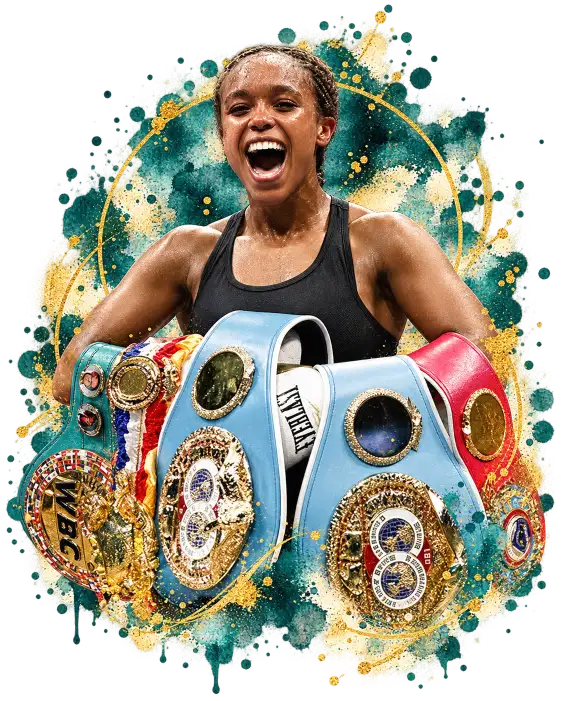
BBC Sport's Born To Brawl takes Natasha back to Toxteth and explores the football dream that collapsed, the family who shaped her and the extraordinary reinvention that eventually led to world championships.
Watch “Tasha Jonas: from rock bottom to three world titles at 37” on BBC Sport ↗
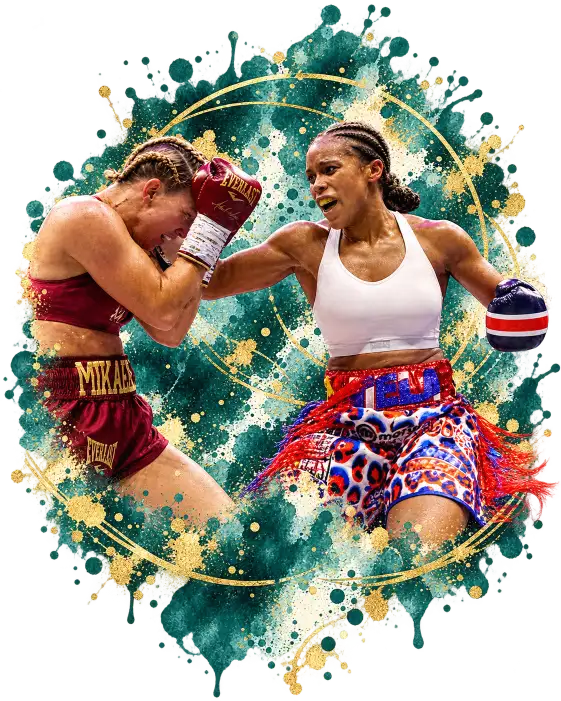
Natasha moved down to welterweight and faced Canada's Kandi Wyatt for the vacant IBF world championship.
She dominated the contest before the referee stopped it in round eight.
Natasha had become a two-weight world champion.
Later in 2023 she obtained a British Boxing Board of Control manager's licence.
Sky Sports and ITV reported that the achievement made her the first Black woman to obtain a British boxing manager's licence.
Management gave Natasha a different way to contribute to the sport.
Rather than simply drawing on what had worked in her own career, she could also help younger fighters avoid some of the mistakes and obstacles she had experienced.
The current British Boxing Board of Control manager listing continues to include Natasha and names fighters under her management.
Natasha defended her IBF welterweight world championship in Liverpool against former unified champion Mikaela Mayer.
It developed into one of the highest-quality fights of Natasha's professional career.
Mayer won one card 97–93, while Natasha received the other two by 96–94 and 96–95.
Natasha retained the title by split decision.
Natasha returned to Liverpool to face WBC champion Ivana Habazin in a welterweight unification contest.
She won convincingly on all three scorecards: 99–92, 99–91 and 100–90.
The result added the WBC belt to Natasha's IBF title and made her a unified world champion in a second weight division.
She had now won five recognised world-title belts across two divisions during an extraordinary late-career run.
Natasha entered the Royal Albert Hall as IBF and WBC welterweight champion against undefeated WBA champion and Olympic gold medallist Lauren Price.
The bout headlined an all-female professional boxing card immediately before International Women's Day.
Price's speed, movement and output proved decisive.
She won a wide unanimous decision with scores of 98–93, 100–90 and 98–92.
Natasha lost the IBF and WBC championships and her professional record moved to 16 wins, 3 losses and 1 draw.
Natasha did not announce an immediate retirement.
She went home to spend time with her daughter and repeatedly said afterwards that returning to the ring would now need to be motivated by a genuinely significant challenge.
That response reflects one of the strongest themes in her speaking work: experience changes the way success and failure are processed.
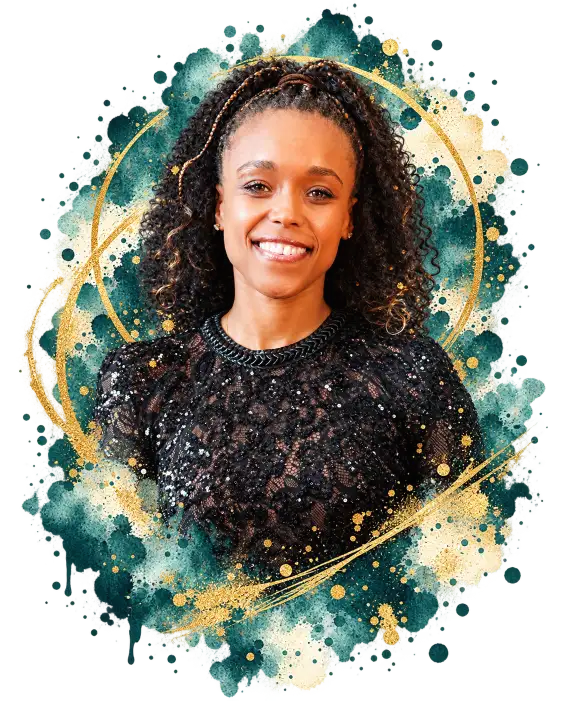
In March 2025, Liverpool awarded Natasha the title of Citizen of Honour.
The city's citation recognised her Olympic representation, her role as an inspiration to young women and her youth, education and charity work.
In June 2025 Natasha became a Charity Champion for Alder Hey Children's Charity.
The role builds on school visits, youth engagement and her commitment to remaining visible and accessible within the city that shaped her.
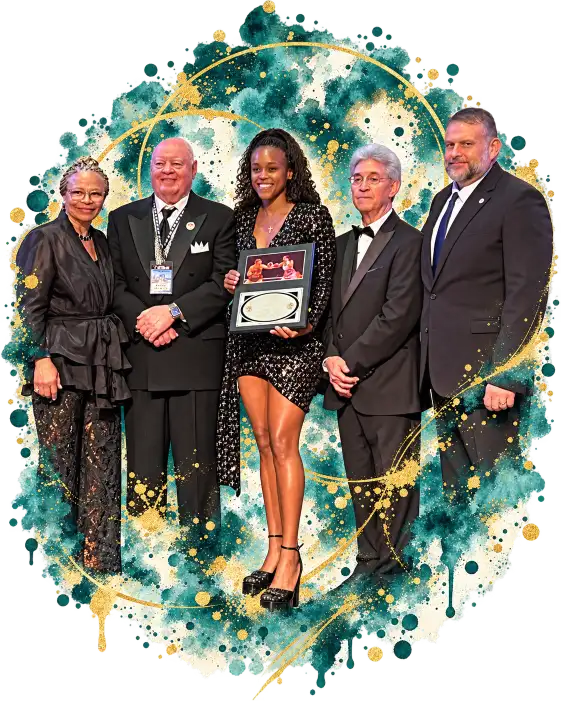
Natasha was appointed a Member of the Order of the British Empire in the King's Birthday Honours 2025.
The official citation reads: “For services to Boxing and to the community in Liverpool.”
Natasha later explained that recognition of her community work made the honour particularly meaningful.
Natasha has not made an unequivocal public retirement announcement following the Lauren Price fight.
In January 2026 she explained that the reason she had not formally announced retirement was that significant fight offers continued to appear.
Her position was clear: only something genuinely major would justify returning to a full elite training camp.
Natasha remains listed by the British Boxing Board of Control as a licensed manager.
The current listing names Jonathan Kumuteo and Murtaza Nadeem among the fighters under her management.
In July 2026 Natasha and Savannah Marshall delivered a free boxing masterclass for girls aged eleven to eighteen at Rotunda ABC in Liverpool.
Returning to the same wider community where Natasha's own boxing journey began gives that work a particular meaning.
In a July 2026 Northern Power Women conversation, Natasha reflected on the MBE, motherhood, defeat, access to sport, representation, Liverpool and why being visible in local schools matters.
Her message to young people remains grounded rather than abstract: a dream does not become impossible simply because nobody from your environment has done it before.
When precedent does not exist, waiting for proof that the path is safe can mean never taking the first step.
Losing a football career felt like losing the person Natasha expected to become. Boxing showed that identity can be reconstructed rather than simply recovered.
Each chapter carries skills forward. Football, amateur boxing, motherhood and professional sport all contributed to the athlete and leader Natasha eventually became.
Motherhood gave Natasha something elite sport alone could not: a clear boundary between a professional result and her entire identity.
Natasha became world champion only after moving several weight divisions and accepting an opportunity that did not resemble the route she had originally expected.
Representation matters most when people coming behind you can see, access and learn from the person who broke the barrier.
Going first, navigating uncertainty and turning individual progress into possibility for other people.
Leading with credibility, consistency and enough confidence to remain human in demanding environments.
Rebuilding after injury, defeat, retirement and periods when the original route has disappeared.
What it means to enter systems not originally designed with women in mind and create space for those who follow.
Working parenthood, boundaries, guilt, perspective and why personal responsibility does not require abandoning professional ambition.
Preparation, standards, discipline and maintaining clarity while the result is public.
Moving from footballer to boxer, Olympian to retired athlete, mother to professional champion and athlete to manager.
Why access, visibility and role models materially affect who believes an opportunity is available to them.
Responding intelligently when performance does not produce the outcome you worked for.
Using lived experience to help emerging talent avoid unnecessary obstacles and develop their own identity.
Connecting personal achievement to something larger than medals, belts or individual recognition.
Why believing something is possible does not remove doubt — but can make action possible despite it.
Natasha Paula Jonas is born and grows up in Toxteth.
Remembers watching the Olympics as a young child and wanting to reach that stage one day.
Develops through competitive football while frequently playing in predominantly male environments.
Earns an American football scholarship and leaves Liverpool with ambitions of an elite career.
Serious injury ends the football pathway and sends Natasha back to Liverpool searching for a new direction.
Starts boxing after initially attending a women's session for fitness.
Develops into a five-time ABA national champion.
Wins international gold in Bulgaria.
Becomes the first female boxer to represent GB Boxing.
Wins in front of a home Liverpool crowd.
Claims light-welterweight bronze at the European Championships.
Reaches the semi-finals in China and qualifies for London 2012.
Becomes the first British female boxer to qualify for an Olympic Games.
Defeats Quanitta Underwood to become Britain's first female Olympic boxing competitor.
Loses an electrifying Olympic quarter-final to the eventual champion.
Adds another major amateur medal.
Competes at the first Commonwealth Games to feature women's boxing; foot injury affects her campaign.
Steps away from full-time elite boxing.
Becomes a mother and initially expects her boxing career to remain finished.
Returns to boxing under trainer Joe Gallagher.
Stops Monika Antonik in the first round.
Viviane Obenauf stops Natasha in round four.
Returns from an eight-month layoff and begins rebuilding her professional career.
Fights to a split draw in her first professional world-title challenge.
Pushes the undisputed lightweight champion to a narrow unanimous decision.
Stops Chris Namús to win the WBO super-welterweight title.
Defeats Patricia Berghult and adds the WBC championship.
Beats Marie-Eve Dicaire and adds the IBF title.
Becomes the first woman to receive the BBBofC award.
Stops Kandi Wyatt for the IBF welterweight championship.
Becomes the first Black woman to obtain a British Boxing Board of Control manager's licence.
Retains the IBF welterweight title by split decision in Liverpool.
Beats Ivana Habazin and adds the WBC welterweight title.
Receives one of her home city's highest civic honours.
Loses the IBF and WBC championships by unanimous decision at the Royal Albert Hall.
Begins representing the Liverpool children's charity.
Named in the King's Birthday Honours for services to boxing and the community in Liverpool.
Receives her insignia following the King's Birthday Honours recognition.
Says only a genuinely major boxing opportunity is likely to tempt her back into another elite camp.
Supports girls at Rotunda ABC alongside Savannah Marshall.
Discusses motherhood, MBE recognition, Liverpool, representation and legacy with Northern Power Women.
Remains active in boxing management, mentoring, community engagement, broadcasting and speaking, with no formal final retirement announcement.
Natasha Jonas MBE is a Liverpool-born Olympian, two-weight professional boxing world champion, former unified champion, boxing manager, broadcaster, community advocate and inspirational speaker.
Natasha grew up in Toxteth, Liverpool, in a large sporting family.
Yes. Football was Natasha's first serious sport and she earned a scholarship in the United States before a major knee injury ended that career path.
Natasha began boxing in 2005 after attending women's sessions at Rotunda ABC in Liverpool.
In 2012 she became the first British female boxer to qualify for an Olympic Games and the first British woman to contest an Olympic boxing bout.
Her achievements included five national ABA titles, European Union gold, European bronze and silver medals and bronze at the 2012 Women's World Championships.
After a decade in elite amateur boxing and injuries that disrupted her later amateur years, Natasha decided she no longer wanted the demands of full-time amateur training. At the time, the women's professional scene also offered far fewer opportunities than it would several years later.
Natasha made her professional debut on 23 June 2017 and stopped Monika Antonik in the first round.
She stopped Chris Namús in February 2022 to win the vacant WBO super-welterweight world championship.
Two. She became a unified super-welterweight champion and later a unified welterweight champion.
Yes. They first met in the quarter-finals of London 2012, where Taylor won before taking Olympic gold. They met again professionally in May 2021, with Taylor winning a very narrow unanimous decision.
Lauren Price defeated Natasha by unanimous decision at the Royal Albert Hall on 7 March 2025, winning Natasha's IBF and WBC welterweight championships.
Following the Lauren Price fight, Natasha's record stands at 16 wins, 3 losses and 1 draw, with 9 knockout victories.
As of September 2026, Natasha has not made an unequivocal final retirement announcement. She has said that only a genuinely major opportunity would motivate another return to full elite training.
Natasha was appointed MBE in the King's Birthday Honours 2025 for services to boxing and to the community in Liverpool.
Yes. She became the first Black woman to obtain a British Boxing Board of Control manager's licence and remains on the Board's current manager listing.
Her core topics include breaking barriers, resilience, authentic leadership, motherhood and ambition, women in leadership, equality, representation, high performance, confidence and reinvention.
Natasha is well suited to corporate conferences, leadership events, women's networks, DEI programmes, employee-resource groups, working-parent events, high-performance sessions, sports events, awards evenings and fireside conversations.
Use The Immersion Project contact page or email sue@theimmersionproject.co.uk to discuss availability and event fit.
This profile has been built from official Olympic, boxing, government, governing-body, community and first-person sources.
Natasha's journey demonstrates that breaking a barrier is only the beginning. The deeper challenge is continuing to adapt, lead, perform and create opportunities for the people coming behind you.
Explore Sports & High-Performance Speakers , discover Corporate Events , view our Training Programmes , explore Inspirational Speakers , or browse all speakers .