Redefine the Goal
Elite sprinting measured progress in fractions of a second. Rehabilitation required James to recognise entirely different measures of success.

Double Olympian | Two-Time European Champion | Former British Champion | Performance Coach | Resilience Speaker
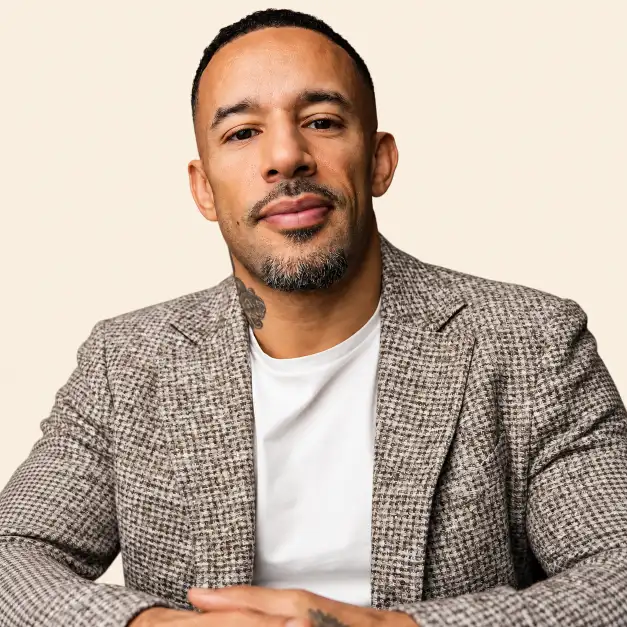
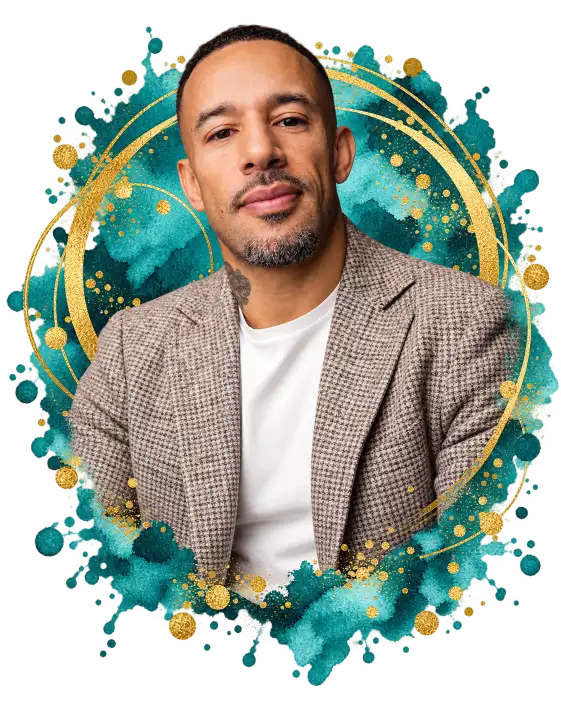
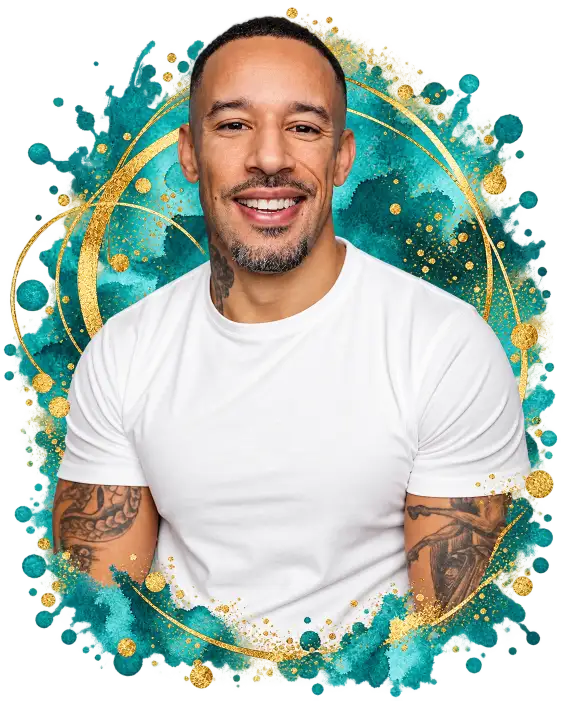
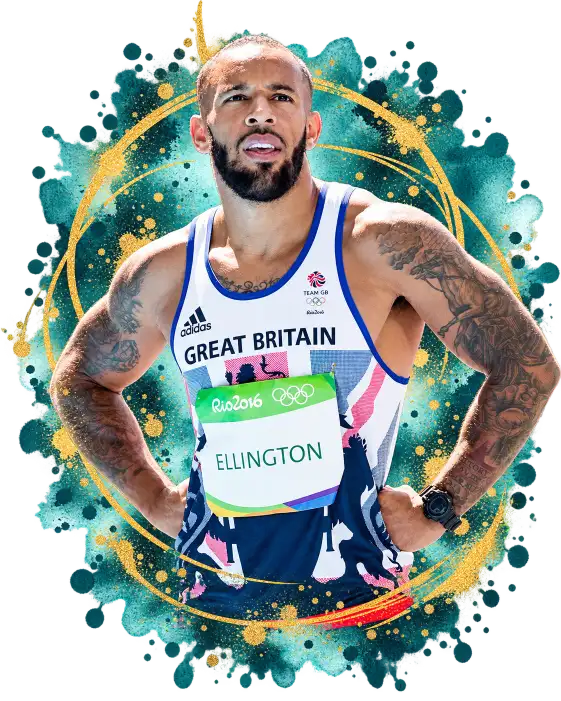
James Ellington OLY is a former British international sprinter, double Olympian, two-time European 4x100m champion, former British 200m champion, performance coach and inspirational speaker.
His sporting career was built around speed, marginal gains, preparation and competing under extreme pressure. In January 2017, that trajectory changed in seconds when a serious road collision in Tenerife left him with multiple fractures and injuries that threatened not only his athletics career but his ability to walk and move normally.
James fought his way back to competitive athletics, continued racing for several years and ultimately retired at the end of the 2023 season. Today his story connects Olympic-level performance with recovery, identity, resilience, gratitude, coaching and the reality of rebuilding when the original plan is no longer available.
James Lee Ellington was born on 6 September 1985 in Lewisham, South London.
He attended Worsley Bridge Junior School in Beckenham and later Forest Hill School.
James has described his interest in running beginning when he was extremely young. One of his earliest athletics memories was watching elite sprinters on television and becoming fascinated by the idea of running fast enough to compete at that level himself.
By his early teens, that fascination had become much more specific.
James has recalled turning up at Crystal Palace at around fourteen years old and telling people that he intended to become one of Britain's best sprinters.
The ambition may have sounded unrealistic, but the early evidence arrived quickly: he became a national under-15 champion during that same period.
Further junior national success followed at under-17 and under-20 level.
At eighteen, James tore his hamstring only weeks before the World Junior Championships.
The injury appeared capable of ending his championship opportunity, but he recovered sufficiently to compete at the national trials, earn selection and reach the World Junior final.
Several years later, after being selected for the European Championships, another serious hamstring injury threatened his progress.
James has described the tear as approximately nine centimetres and close enough to a full rupture that there were concerns about whether his sprint career could continue.
He was sprinting again within weeks.
Those experiences matter because resilience was already part of James's sporting development long before the accident that would later define his public comeback story.
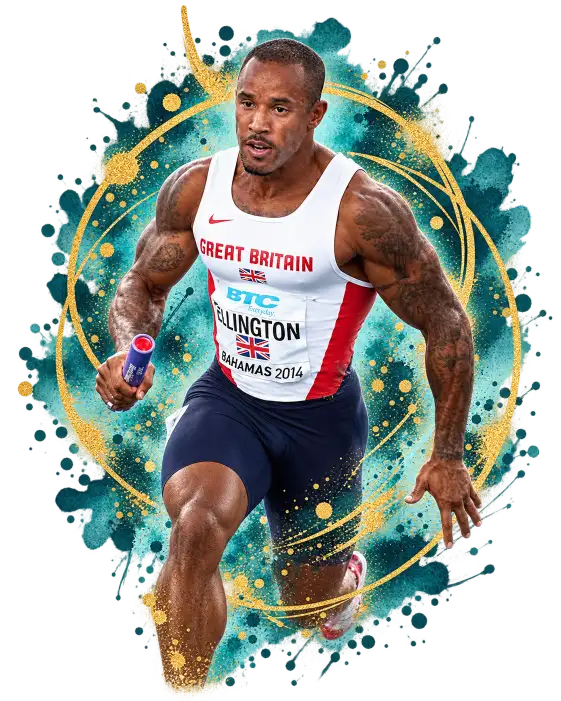
James made his senior global championship debut at the 2011 World Championships in Daegu, South Korea.
He competed in the men's 200 metres and ran 20.82 seconds in his heat.
He did not progress from the opening round, but reaching a senior World Championships represented a significant transition from talented domestic sprinter to international athlete.
James was around twenty-five when he reached his first senior global championship.
His journey therefore did not follow the simple narrative of a teenage prodigy moving seamlessly into senior medals.
Persistence, injury setbacks and financial reality all remained part of the path.
Ahead of his home Olympic Games, James faced a problem familiar to athletes outside the very highest commercial tier: elite preparation was expensive, while reliable sponsorship was difficult to secure.
After injury affected his funding and conventional sponsorship approaches failed, he took an unusual step — offering his sponsorship rights through an eBay auction.
The campaign generated national attention.
An apparent winning bid of more than £32,000 turned out to be a hoax.
But the publicity created by the campaign produced a real opportunity. King of Shaves stepped in with approximately £30,000 of sponsorship, allowing James to reduce the financial pressure, access better physiotherapy and focus more fully on training.
James then won the British Olympic trials 200m and secured selection for Team GB at the London 2012 Olympic Games.
He competed in the men's 200m, fulfilling a goal that had once appeared financially as well as physically uncertain.
In this O2 Sports interview, James returns to South London and talks about discovering sprinting, his Olympic ambitions and the unusual eBay sponsorship campaign that helped him reach London 2012.
James's Olympic qualification year also delivered a national championship as he won the British 200m title.
The performance confirmed his position among Britain's leading sprint athletes.
James successfully retained the British 200m title in 2013.
Back-to-back national championships demonstrated that his London qualification had not been a single breakthrough performance.
In 2014 James was part of the British men's 4x100m relay programme that won bronze at the IAAF World Relays.
Team GB records that the quartet also produced Britain's fastest men's 4x100m performance for fifteen years during that campaign.
Representing England at the Glasgow Commonwealth Games, James contributed to the men's 4x100m team that won silver.
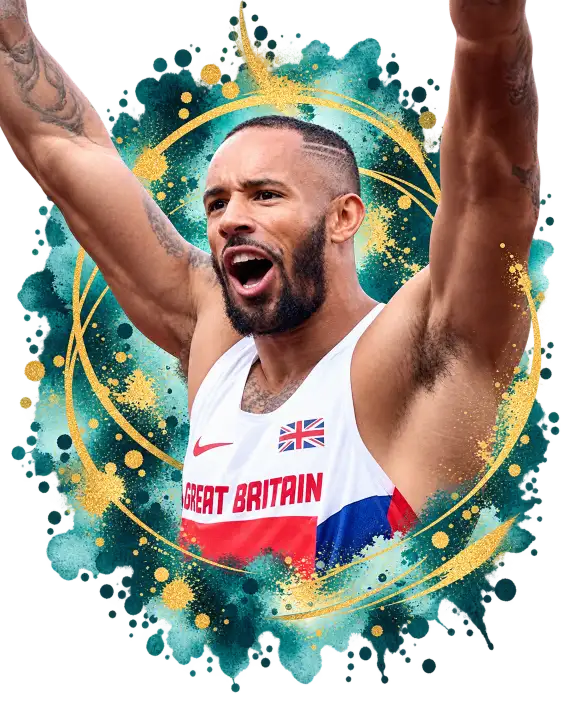
Later that summer, Great Britain won European 4x100m gold in Zürich.
James had now moved beyond Olympic participation into major championship medal-winning performance.
James opened the 2016 outdoor season with the fastest 200m of his career, clocking 20.31 seconds.
At the British trials, he ran 9.96 seconds in the 100m final. The wind assistance meant the performance could not count as a legal personal best, but it showed the level of speed he had reached.
At the European Championships in Amsterdam, James ran a legal 10.04 seconds in his 100m semi-final — the fastest legal time of his career.
He went on to finish fifth in the European 100m final.
Great Britain then won the men's 4x100m final in 38.17 seconds with James Dasaolu, Adam Gemili, James Ellington and Chijindu Ujah.
It gave James his second European 4x100m title.
At Rio 2016, James represented Great Britain in the men's 100m.
He ran 10.29 seconds in his opening-round heat and did not progress to the semi-final.
He was also part of the Great Britain men's 4x100m relay team.
The British quartet reached the Olympic final and finished fifth — giving James a top-eight Olympic result and completing his second Games.
James entered 2017 believing he was moving towards the strongest period of his career.
While on a warm-weather training camp in Tenerife, he was travelling as a passenger on a motorbike ridden by fellow British athlete Nigel Levine when the bike was involved in a collision with a car.
James suffered multiple broken bones in his legs together with fractures affecting his pelvis, ankle and eye socket.
He lost approximately six pints of blood, required intensive care, spent around four weeks in hospital and underwent multiple operations.
A carbon-fibre rod was inserted into his right leg, with additional screws and surgical hardware used during reconstruction.
The immediate conversation was no longer about race times, rankings or championship selection.
The task was to stabilise his body, recover basic movement and begin rehabilitation.
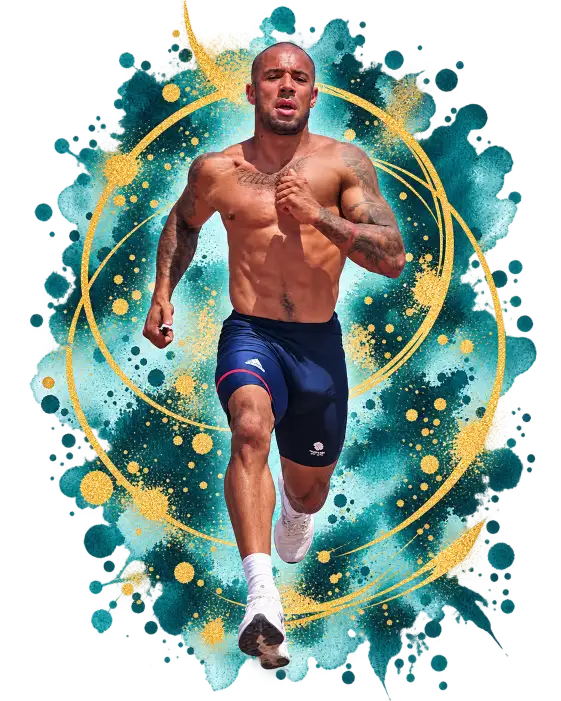
Elite sprinting measured progress in fractions of a second. Rehabilitation required James to recognise entirely different measures of success.
Resilience did not mean pretending the injuries were smaller than they were. It meant understanding the medical reality and working from there.
The habits built through elite sport became useful in rehabilitation: repetition, patience, discipline and commitment without immediate reward.
When the role of Olympic sprinter could no longer be taken for granted, James had to separate personal identity from race results.
Recovery depended on medical teams, rehabilitation professionals, family, friends and people prepared to support a long process rather than a dramatic moment.
Surviving the collision changed the context around ambition. James's message now combines the desire to perform with appreciation for what remains possible.
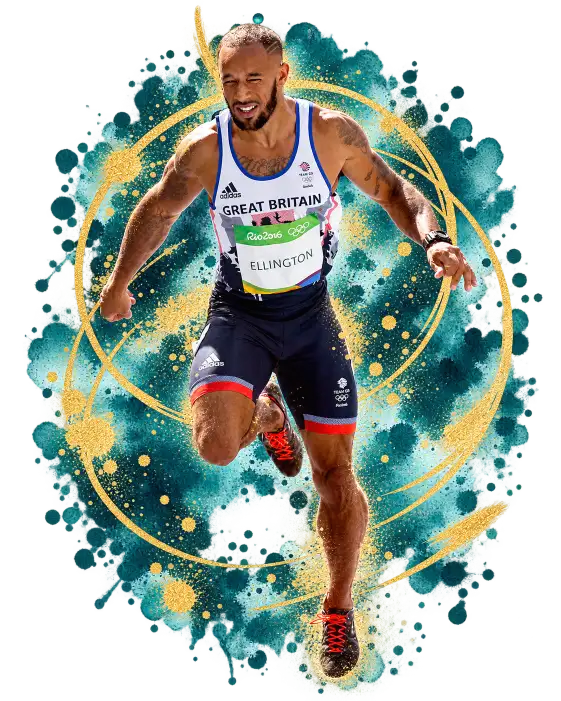
James returned to competitive track racing after extensive rehabilitation.
The comeback itself was significant. His injuries had affected the very structures an elite sprinter relies on for force, speed and stability.
He continued racing across subsequent seasons rather than treating a single return appearance as the end of the story.
In 2021 he was still competing nationally, including at the British Athletics Championships.
James ultimately found that his body could not return to the global level he had reached before the crash.
That creates an important distinction in his speaking story: resilience is not always about getting the original outcome back.
Sometimes it is about knowing that you fully committed to the process and then being prepared to build a different future.
James officially retired from competitive athletics at the end of 2023.
He later explained that he had tried everything he could to return to the level he occupied before the collision, but his body could no longer tolerate the demands required for global sprinting.
Retirement therefore represented acceptance rather than surrender.
In May 2024, James's legal team announced that an out-of-court six-figure settlement had been reached in connection with the Tenerife collision.
The settlement was intended to support ongoing rehabilitation and compensate for the impact of the injuries on his athletics career.
The legal claim was not against Nigel Levine.
For James, the agreement also provided an opportunity to close a seven-year legal chapter and focus more fully on what came next.
James has developed Velocity Pro, a consultancy focused on speed coaching, performance development and advisory work across sport.
His post-athletics coaching is not limited to track athletes. Public information about the business describes work with wider sports environments, including professional football.
James's current professional profile lists him as a qualified coach, including a UK Athletics Professional Certified Coach credential and Level 3 personal trainer qualification.
His current services include public speaking, corporate events, corporate training and team building.
That work allows him to connect two very different forms of experience: preparing for Olympic competition and rebuilding after life-changing trauma.
James is also associated with Lifeplus as a sponsored athlete and ambassadorial voice around wellbeing, determination and resilience.
In 2026, James continues to appear at corporate, community and performance-focused events.
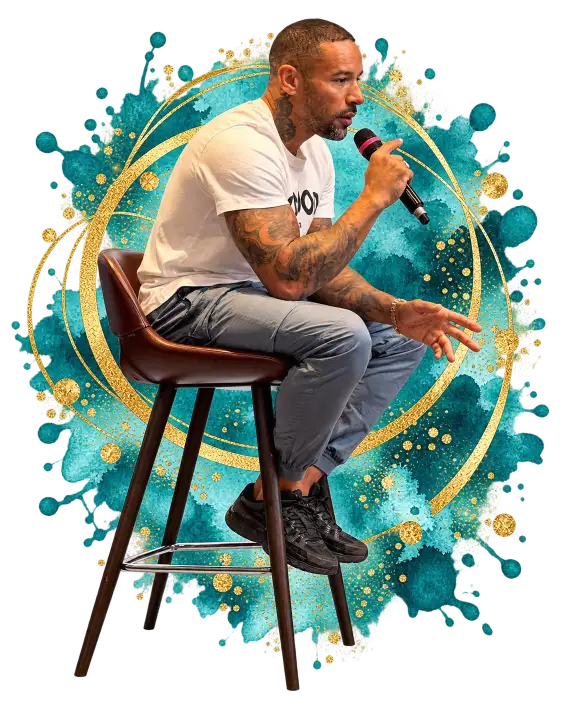
During a Lifeplus event in Birmingham, he appeared alongside fellow Olympian Christian Taylor to speak with adults, families and young people about ambition, discipline, resilience, determination, setbacks and competing on the world stage.
His current professional profile continues to list public speaking, corporate events, corporate training and team building among his services.
That means James's speaker proposition remains current rather than retrospective: he is actively translating elite sport, injury, recovery and coaching experience into conversations with today's organisations and communities.
Olympic performance is rarely created on the day. The competitive moment reveals the standards built beforehand.
When the long-term outcome feels overwhelming, performance becomes easier to manage by identifying the next useful action.
Rehabilitation showed that progress cannot always be measured using the metrics that mattered before circumstances changed.
A career can change without making everything learned through that career irrelevant.
Resilience is not endless denial. Sometimes the strongest decision is recognising when one route has closed and another deserves full commitment.
Appreciating survival, support and opportunity does not require losing the desire to improve.
Preparation, marginal gains, personal standards and executing under pressure.
Rebuilding after a life-changing event without pretending recovery is simple or linear.
Challenging external assumptions while remaining intelligent about changing circumstances.
Lessons from Olympic trials, championships and environments where one performance can define selection.
Why daily standards matter more than occasional motivation in sport, rehabilitation and work.
Finding value, direction and purpose when a role that has defined your life comes to an end.
Reframing ambitious outcomes into actions that remain controllable today.
Responding to uncertainty, injury, frustration and slow progress without losing perspective.
How a changed perspective can strengthen rather than reduce performance ambition.
James Lee Ellington is born on 6 September in South London.
Develops an early fascination with elite sprinting after watching athletics on television.
Begins serious athletics training and quickly wins a national under-15 title.
Continues progressing through under-17 and under-20 level.
Tears a hamstring only weeks before the championships but recovers, earns selection and reaches the World Junior final.
Suffers another major tear around the time of European Championship selection but returns to sprint training within weeks.
Competes in the 200m at the World Championships in Daegu.
Auctions sponsorship rights after funding difficulties and ultimately secures support from King of Shaves.
Wins the British 200m title and qualifies for his first Olympic Games.
Represents Great Britain in the Olympic men's 200 metres.
Successfully retains the national 200m championship.
Contributes to a major international 4x100m medal for Great Britain.
Wins men's 4x100m relay silver with England in Glasgow.
Wins men's 4x100m gold for Great Britain in Zürich.
Runs 20.31 seconds.
Runs a legal 10.04 seconds at the European Championships.
Wins a second European men's 4x100m relay title in Amsterdam.
Competes in the 100m and helps Great Britain reach fifth place in the Olympic 4x100m final.
Suffers multiple serious injuries in a road collision while attending a warm-weather training camp.
Moves from hospital treatment and surgery into a long programme of physical rehabilitation.
Returns to track competition after the crash.
Competes at events including the British Athletics Championships.
Ends his elite competitive athletics career after years of attempting to return to pre-crash performance levels.
A six-figure out-of-court settlement is agreed in connection with the Tenerife collision.
Develops performance, speed-coaching and advisory work across sport.
Works with Lifeplus around sport, wellness, resilience and inspirational engagement.
Appears at Lifeplus's Birmingham event alongside fellow Olympian Christian Taylor, discussing elite performance, setbacks and resilience.
James Ellington OLY is a retired British international sprinter, double Olympian, two-time European 4x100m champion, former British 200m champion, performance coach and inspirational speaker.
James was born on 6 September 1985 in Lewisham, South London.
His interest in sprinting began in childhood. He began taking athletics seriously at around fourteen and quickly became a national under-15 champion.
James represented Great Britain at London 2012 in the 200m and at Rio 2016 in the 100m and men's 4x100m relay.
His legal 100m personal best is 10.04 seconds, recorded at the 2016 European Championships. He also ran 9.96 seconds with wind assistance at the 2016 British trials.
His 200m personal best is 20.31 seconds, set in 2016.
His major relay honours include European 4x100m gold in 2014 and 2016, Commonwealth 4x100m silver in 2014 and World Relays bronze in 2014.
Before London 2012, James needed additional financial support to train and prepare at elite level. He offered his sponsorship rights through eBay, attracting major publicity and ultimately securing sponsorship from King of Shaves.
In January 2017, while attending a training camp in Tenerife, James was the passenger on a motorbike involved in a collision with a car. He suffered multiple serious fractures, required surgery and began an extensive rehabilitation programme.
Yes. James returned to competitive sprinting after rehabilitation and continued competing across several seasons, including racing at the 2021 British Athletics Championships.
He officially retired from competitive athletics at the end of the 2023 season.
Velocity Pro is James's performance consultancy focused on speed coaching, athlete development and advisory work across multiple sports.
James works across performance coaching, mentoring, public speaking, corporate events and corporate training. He also has an ongoing association with Lifeplus.
His key themes include high performance, resilience after trauma, discipline, performing under pressure, identity, recovery, gratitude, mindset and redefining limits.
James is suitable for corporate conferences, leadership events, resilience programmes, high-performance sessions, sports events, team development, sales kick-offs and facilitated Q&A sessions.
Use The Immersion Project contact page or email sue@theimmersionproject.co.uk to discuss James's availability and event fit.
This profile draws on official athletics records, Olympic records, contemporary interviews, recovery documentation and James's current professional activity.
James's story connects the discipline required to become an Olympian with a much harder question: what happens when the future you have spent years building disappears without warning?
Explore Sports & High-Performance Speakers , discover Corporate Events , view our Training Programmes , or browse all speakers .