Fast Communication
There is rarely time for long discussion during competition. High-performing partnerships develop shared language before pressure arrives.

Olympic Silver Medallist | World Champion | World No. 1 | Broadcaster | Author | Corporate Speaker
Gail Emms MBE is an Olympic silver medallist, World Champion, former World No. 1 mixed doubles badminton player, broadcaster, author, event host, coach and corporate speaker.
Her career has taken her from a childhood badminton court in Bedford to the Olympic podium in Athens, the top of the world rankings, World Championship gold and a second Olympic Games in Beijing. Since retiring, she has built an equally revealing second career around broadcasting, speaking, writing, presentation coaching, athlete transition, workplace confidence and business networking through sport.
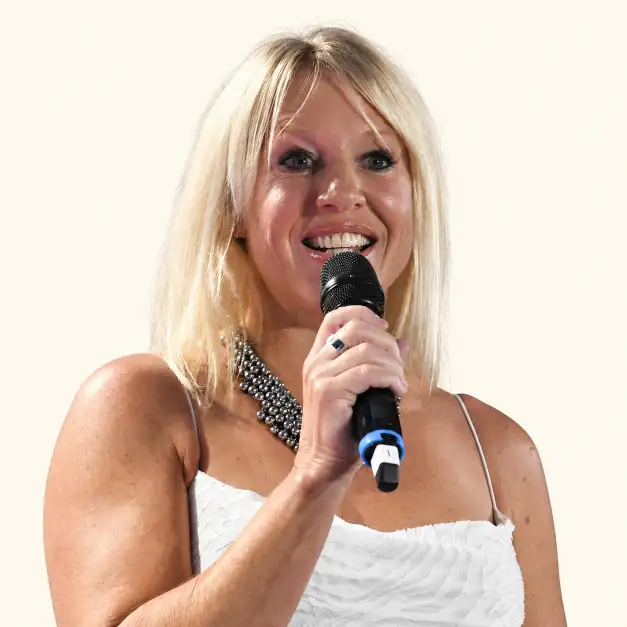
Gail Elizabeth Emms was born on 23 July 1977 in Hitchin, Hertfordshire, and grew up in a strongly sporting environment around Bedford.
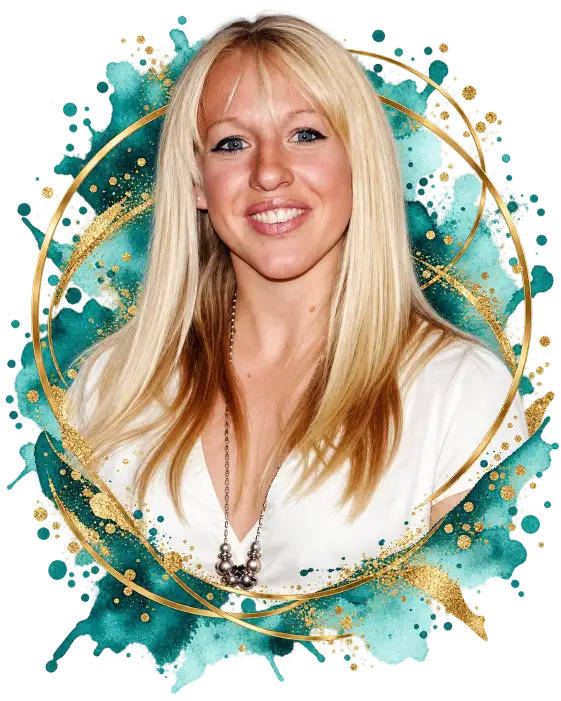
Gail began playing badminton at only four years old. Her family loved sport, and activity was part of everyday life rather than something reserved for organised competition.
She later recalled that by seven she was already beating children several years older than her.
That early ability convinced her parents that natural enthusiasm needed better coaching and a more demanding environment.
From around the age of ten until sixteen, Gail travelled from Bedford to Hatfield for regular coaching sessions led by Bill Goode.
Those sessions introduced an important principle that remained throughout her elite career: talent might open the door, but progress depended on concentration, repetition and accepting demanding standards.
Gail's mother, Janice, had her own extraordinary sporting history. She played in the 1971 women's football World Cup in Mexico as part of the pioneering England side whose achievements were largely overlooked at home for decades.
That family history would eventually become central to Gail's work as an author.
Gail and future mixed-doubles partner Nathan Robertson were already competing internationally as teenagers and reached the medal stages of the 1994 World Junior Championships in Kuala Lumpur.
In 1995 Gail made her first senior appearance for England, beginning an international career that would ultimately span thirteen years.
Gail studied Sports Science at Kingston University and graduated in 1998.
The degree complemented an increasingly professional sporting environment in which physiology, training load, recovery and performance were becoming more systematically understood.
SportsAid has recorded Gail among its alumni. She has explained that early financial support helped with the significant costs of coaching, equipment, travel and competition before she became established.
After university she committed to full-time badminton, supported in part by the developing national high-performance funding system.
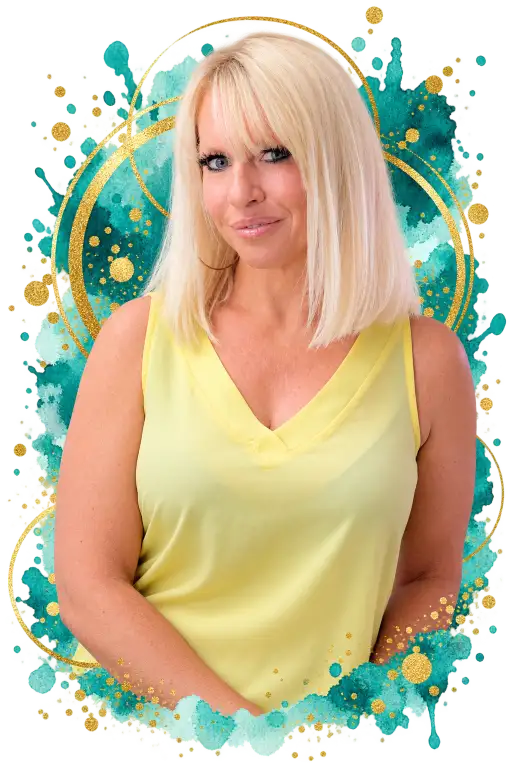
Gail has spoken publicly about the disappointment of missing qualification for the Sydney 2000 Olympic Games.
Accounts of that period record her ending the qualification race ranked seventeenth when the required Olympic qualification position was inside the top sixteen.
Missing by such a narrow margin created a very different psychological challenge from simply being nowhere near the required level.
The setback showed Gail that the Olympic level was not an unrealistic fantasy. The gap existed, but it was small enough to attack.
She later described the Sydney disappointment as one of the experiences that increased her commitment to the next Olympic cycle.
For organisations, it offers a useful distinction: disappointment can either become a verdict or become unusually precise information about what still needs to change.
At the 2002 Commonwealth Games in Manchester, Gail was part of the England side that won gold in the mixed team competition.
The result demonstrated something central to the rest of her career: individual skill mattered, but Gail's greatest successes repeatedly occurred inside partnerships and teams.
Gail also won women's doubles bronze with Joanne Goode.
Manchester became an important step between the Sydney disappointment and the Olympic breakthrough that would follow two years later.
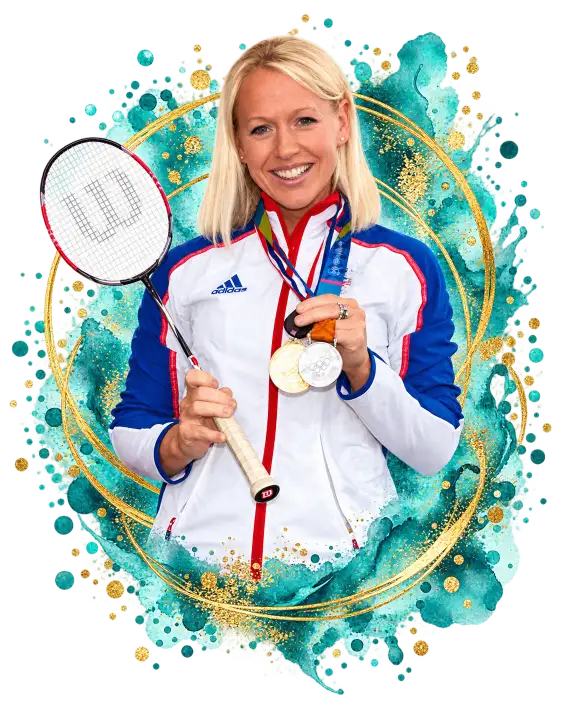
Gail's most famous partnership was with Nathan Robertson in mixed doubles.
Mixed doubles badminton is a demanding demonstration of teamwork because decision-making happens at extreme speed. Space, movement and tactical responsibility are shared continuously; poor communication can be punished within seconds.
At Athens 2004, Emms and Robertson advanced through the mixed-doubles draw to reach the Olympic final.
They defeated Denmark's Jonas Rasmussen and Rikke Olsen in the semi-final before meeting defending Olympic champions Zhang Jun and Gao Ling of China.
The final went to three games. China won the first 15–1, Britain responded by taking the second 15–12, and Zhang and Gao eventually won the deciding game 15–12.
Gail and Nathan left Athens with Olympic silver — one of the defining results in modern British badminton.
Gail also competed in women's doubles at the same Games alongside Donna Kellogg.
There is rarely time for long discussion during competition. High-performing partnerships develop shared language before pressure arrives.
Effective teams understand where responsibility changes hands and how individual strengths contribute to a shared result.
A player cannot cover every area of the court. Partnership requires acting with confidence that somebody else will fulfil their role.
Mistakes are unavoidable. The competitive advantage often lies in how quickly two people stop carrying the previous point into the next one.
Strong partnerships need enough psychological safety for difficult tactical conversations without destroying confidence.
Winning and losing together changes the conversation from blame to collective problem-solving.
In 2005 Gail and Nathan Robertson won the prestigious All England mixed doubles title in Birmingham.
They defeated Denmark's Thomas Laybourn and Kamilla Rytter Juhl in the final.
The All England is one of badminton's oldest and most recognised international championships, making the victory a major achievement in its own right.
Gail and Nathan also reached the top of the mixed-doubles world rankings.
Gail's official career statistics record their World No. 1 period across 2005 and 2006.
Reaching the top once requires performance. Staying there requires repeatable performance while every opponent has increasing amounts of information about how you play.
At the 2006 World Championships in Madrid, Gail and Nathan Robertson reached another major mixed-doubles final.
This time the opponents were fellow English pair Anthony Clark and Donna Kellogg.
Emms and Robertson won 21–15, 21–12 to become World Champions.
At the Melbourne Commonwealth Games, Gail and Nathan also won mixed-doubles gold.
Gail added team silver and women's doubles bronze alongside Donna Kellogg.
Her honours in this era also included European titles: mixed-doubles gold in 2004 and women's-doubles European gold with Donna Kellogg in 2006.
Gail's official website records 68 senior appearances for England.
Six English national mixed-doubles championships are listed in her official career statistics.
Her official record also lists five national women's-doubles titles.
Athens 2004 and Beijing 2008.
Gail returned to Olympic competition at Beijing 2008 in both mixed doubles and women's doubles.
In mixed doubles, Emms and Robertson reached the quarter-finals before losing to the South Korean pair who went on to win Olympic gold.
Gail retired from elite international badminton after Beijing.
Retirement created a challenge very different from competition.
Gail has spoken publicly and candidly about finding the transition difficult, including repeated career rejection, financial uncertainty and the loss of the clear identity and purpose elite sport had provided.
In sport, progress had rankings, training plans, coaches and immediate feedback. Outside sport, the measures of success were less obvious.
Career transition, restructuring, promotion, redundancy and retirement can all involve a similar human question: who are you when the role that once organised your identity changes?
In the 2009 Birthday Honours, Gail Elizabeth Emms was appointed a Member of the Order of the British Empire.
The official honours citation records the award as being for services to badminton.
The honour recognised a career that had helped raise the profile of British badminton through Olympic, World, European, Commonwealth and All England success.
Since retirement, Gail has built a substantial media career across television and radio.
Her work has included commentary, sports discussion, studio appearances and programmes including BBC Radio 5 Live's Fighting Talk and BBC's A Question of Sport.
Elite sport prepared Gail for live pressure, but hosting required a different kind of performance: listening, timing, audience awareness and helping other people look good rather than being the centre of the action.
Through more than sixteen years of consultancy and corporate work, Gail has spoken on performance, partnership, communication, resilience, confidence, transition and the realities behind sporting success.
Her combination of Olympic experience and post-sport challenges gives those conversations a wider perspective than a conventional victory story.
Gail grew up knowing that her mother Janice had represented an England women's football team at the 1971 Women's World Cup in Mexico.
The tournament took place during an era when women's football in England had been marginalised for decades.
Players returned from Mexico to little recognition, and the history of the team largely disappeared from mainstream sporting memory.
Gail turned that family history into The Lost Lionesses: The Incredible Story of England's Forgotten Trailblazers.
The book was published in September 2024 and draws on the experiences of the players themselves.
It extends Gail's speaking themes into visibility, equality, recognition and the importance of asking whose achievements have been recorded — and whose have been forgotten.
Gail's autobiography, Grit and Goose Feathers: Chasing Medals and Finding Me. My Olympic Journey Uncovered, was published on 13 October 2025.
The book moves beyond a conventional list of medals and championships into the demanding training, career-defining moments and complicated transition into life after elite sport.
The title connects the resilience for which Gail became known with the goose feathers traditionally used in badminton shuttlecocks.
It is also the name she has used for motivational material built around the reality that sporting excellence contains mistakes, uncertainty and imperfect performances as well as success.
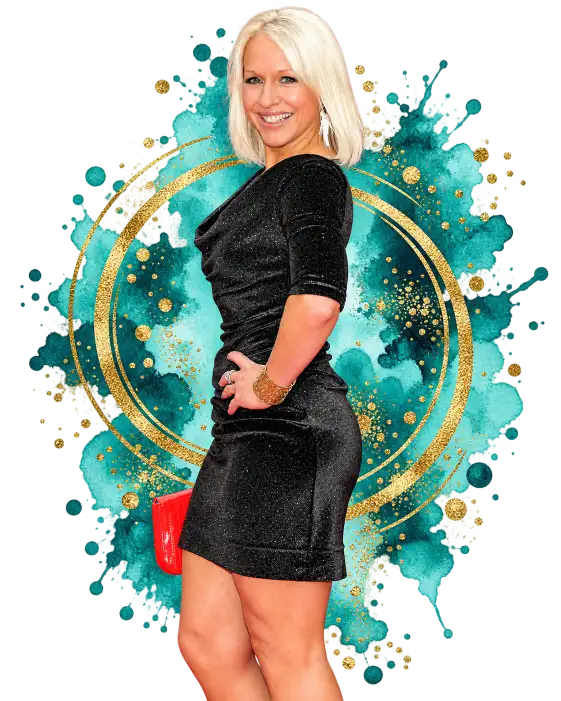
In February 2026 Gail launched GE Padel Events, using one of the UK's fastest-growing racket sports to create corporate networking, client engagement and team experiences.
The concept combines padel, hospitality, competition and relationship-building through formats including corporate tournaments, coaching experiences and Pro-Am events.
In June 2026 Athlete Media Group announced a partnership with GE Padel Events designed to expand those experiences across the UK and internationally.
Gail's current professional profile also includes Power of Presence, a presentation-training programme developed to help people become more confident and effective when speaking and presenting.
She also works as an ADHD executive coach, supporting adults diagnosed with ADHD in workplace environments.
Together, these projects demonstrate a career that continues to evolve around confidence, communication, performance and human connection rather than simply retelling past sporting achievements.
Working well together requires far more than liking each other. Roles, trust, communication and accountability need deliberate practice.
Under stress, messages need to become clearer and simpler rather than longer and more complicated.
A mistake becomes much more expensive when the emotional response to it damages the next decision.
Missing Sydney qualification demonstrated that Gail was close enough to the Olympic level for focused improvement to matter.
Olympic medals and world titles did not automatically make retirement easy. Purpose needs to be rebuilt when a defining role changes.
Broadcasting, writing, hosting, coaching and entrepreneurship each required Gail to become a beginner again in new environments.
Staying tactically clear when years of preparation are compressed into a small number of decisive moments.
Trust, communication, role clarity and shared responsibility from one of sport's most demanding partnership disciplines.
What near misses, defeats, career change and imperfect performances can teach about recovering without pretending setbacks do not hurt.
Creating language that remains useful when speed, pressure and emotion reduce the time available to think.
Building enough internal evidence to communicate clearly and authentically when attention turns towards you.
Identity, transition and finding purpose when the role that once defined performance comes to an end.
Visibility, equality, recognition and what Gail learned through both her own career and the forgotten football history of her mother's generation.
Leadership is not always standing in front. Sometimes it means knowing when to support, challenge, communicate or create space for somebody else.
Moving from Olympic athlete to broadcaster, author, coach, business founder and communicator without expecting the next identity to arrive fully formed.
Gail Elizabeth Emms is born on 23 July 1977 in Hitchin, Hertfordshire.
Begins playing the sport that will eventually take her to World No. 1.
Gail later recalls already beating players several years older than herself.
Travels from Bedford for regular coaching sessions in Hatfield and begins developing more serious competitive standards.
Reaches the medal stages of the World Junior Championships with Nathan Robertson.
Represents England at senior international level for the first time.
Graduates from Kingston University before committing to full-time elite badminton.
Misses Olympic qualification by a narrow world-ranking margin and redirects the disappointment into the next cycle.
Wins mixed-team gold and women's-doubles bronze for England in Manchester.
Wins European mixed-doubles gold with Nathan Robertson.
Gail and Nathan reach the Athens Olympic mixed-doubles final and win silver for Great Britain.
Wins mixed-doubles gold at the prestigious All England Championships.
Reaches the top of the mixed-doubles world rankings with Nathan Robertson.
Wins mixed-doubles gold in Melbourne, along with team silver and women's-doubles bronze.
Wins the World Championship mixed-doubles title in Madrid.
Adds another European title alongside Donna Kellogg.
Returns to the Olympic Games and reaches the mixed-doubles quarter-finals.
Retires from international badminton after Beijing and begins the transition into a new professional identity.
Appointed Member of the Order of the British Empire for services to badminton.
Builds a second career across broadcasting, hosting, motivational speaking, consultancy and ambassador work.
Speaks publicly about the loss of identity that can accompany retirement and the need for better transition support.
Publishes the story of the pioneering 1971 England women's football team that included her mother.
Publishes her autobiography exploring elite sport, medals, identity and life beyond competition.
Launches a corporate padel-events business connecting sport, networking, hospitality and relationship-building.
Athlete Media Group announces a partnership with GE Padel Events to expand corporate padel experiences.
Continues speaking, hosting, presentation coaching, ADHD executive coaching, writing, media work and corporate sport projects.
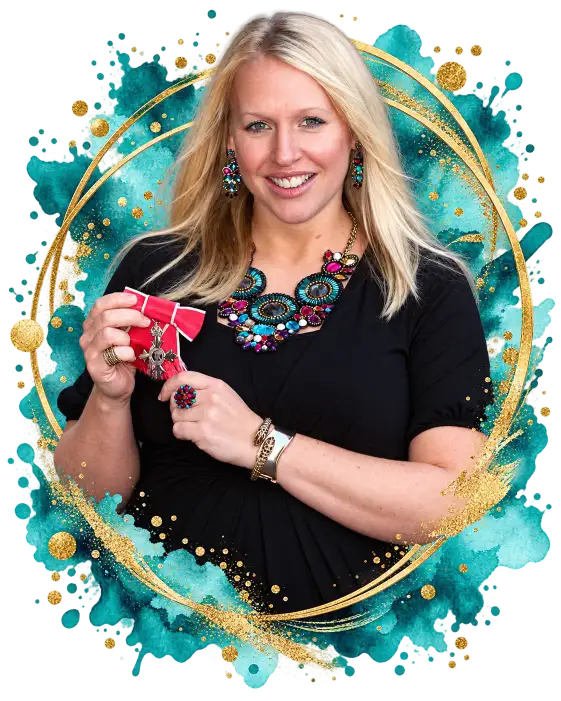
Gail Emms MBE is a retired English badminton player, Athens 2004 Olympic silver medallist, 2006 World Champion, former World No. 1 mixed-doubles player, broadcaster, author, event host, coach and corporate speaker.
Gail Elizabeth Emms was born on 23 July 1977 in Hitchin, Hertfordshire, England, and grew up around Bedford.
She began playing badminton at four years old and was already competing successfully against older children while still very young.
Gail studied Sports Science at Kingston University and graduated in 1998.
Gail first represented England at senior international level in 1995.
No. Gail narrowly missed qualification for Sydney 2000. She has subsequently spoken about how that disappointment strengthened her commitment to the next Olympic cycle.
Gail Emms and Nathan Robertson won the mixed-doubles silver medal for Great Britain at the Athens 2004 Olympic Games.
Her best-known mixed-doubles partnership was with Nathan Robertson. Together they became Olympic silver medallists, World Champions, All England Champions and World No. 1.
Yes. Gail and Nathan Robertson reached No. 1 in the world mixed-doubles rankings, with her official career statistics listing their World No. 1 period across 2005 and 2006.
Gail and Nathan Robertson won the mixed-doubles World Championship in Madrid in 2006.
Yes. Gail Emms and Nathan Robertson won the All England mixed-doubles title in 2005.
Gail competed at two Olympic Games: Athens 2004 and Beijing 2008.
She retired from elite international badminton after the Beijing 2008 Olympic Games.
Gail was appointed MBE in the 2009 Birthday Honours for services to badminton.
The Lost Lionesses is Gail's 2024 book about the pioneering England women's football team that competed at the 1971 Women's World Cup in Mexico. Gail's mother Janice was part of that team.
Grit and Goose Feathers: Chasing Medals and Finding Me is Gail's autobiography, published in October 2025. It covers elite sport, Olympic ambition, training, major career moments and life after retirement.
GE Padel Events is Gail's corporate padel-events venture, launched in February 2026. It creates business networking, client engagement and team experiences using padel, hospitality and sport.
Gail continues to work across corporate speaking, hosting, media, writing, Power of Presence presentation training, ADHD executive coaching and GE Padel Events.
Gail's key topics include performing under pressure, teamwork, partnership, communication, resilience, confidence, career transition, women in sport, leadership and high performance.
Gail is suitable for leadership conferences, corporate events, women-in-business and women-in-sport events, team-development sessions, high-performance programmes, awards evenings, panels, facilitated Q&As and sports events.
Use The Immersion Project contact page or email sue@theimmersionproject.co.uk to discuss Gail's availability, format and your event objectives.
Biography, competition results and current professional information on this page have been cross-checked against official sporting, government, publishing and current professional sources.
Gail's story connects elite performance with the human realities behind it: missing selection, building a world-class partnership, reaching World No. 1, performing in an Olympic final, becoming World Champion and then learning how to build purpose again when elite competition ended.
Explore more Sports & High-Performance speakers , discover Corporate Events , explore Training Programmes , or browse all speakers .