Challenge the Barrier
Before accepting that something cannot happen, understand whether the limitation belongs to the person or to the system around them.
Double Paralympic Champion | Four-Time World Champion | Marathon World Record Holder | Foundation Founder | Inclusion & Resilience Speaker
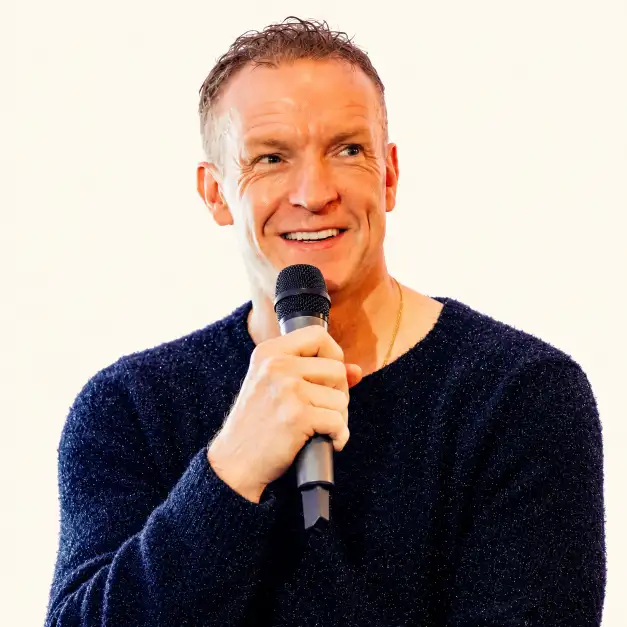
Richard Whitehead MBE PLY is one of Britain's most accomplished Para athletes: a double Paralympic champion, four-time World Champion, European Champion, marathon world-record holder, former Winter Paralympian, charity founder and global advocate for disability inclusion.
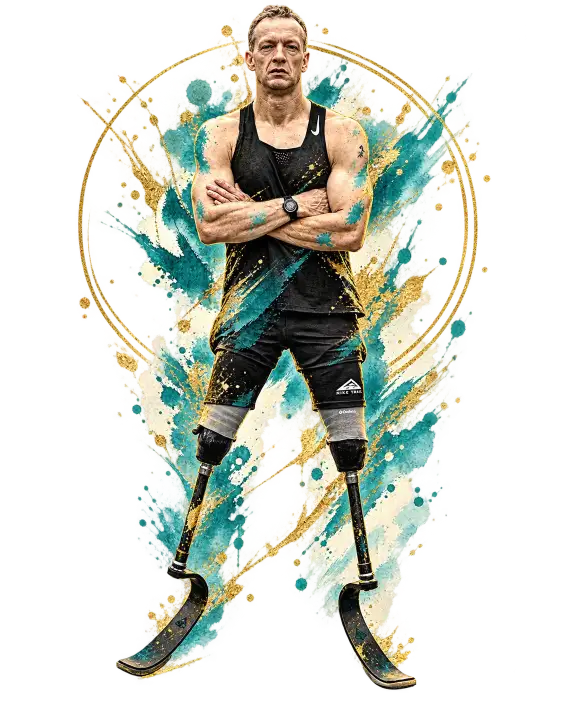
Born with a double through-knee congenital amputation, Richard grew up at a time when disability was frequently associated with restriction rather than opportunity.
His response has never simply been to prove that he personally can achieve difficult things.
Across elite sport, charity, business speaking and community work, his wider mission has been to ask why barriers exist, who they exclude and what needs to change so that more people can participate.
His philosophy is simple: Live Without Limits.
Richard Whitehead was born on 19 July 1976 and grew up around Lowdham, near Nottingham.
He was born with a double through-knee congenital amputation.
Richard credits his parents with establishing one of the most important principles of his life: disability did not have to become the organising principle around everything he was allowed to attempt.
They encouraged him to participate, compete and discover capability through sport.
Richard learned to swim from around the age of four.
Swimming provided independence, strength and an environment in which movement could be explored rather than restricted.
He also trained in an able-bodied gymnastics club through childhood, continuing until approximately fourteen.
Balance, upper-body strength, coordination and body awareness developed there would remain useful throughout his later sporting career.
Richard has reflected that disability inclusion was far less visible during the late 1970s and 1980s.
The obstacles were not always physical. Assumptions made by other people could create barriers long before Richard had attempted an activity himself.
Sport became one of the environments in which those assumptions could be challenged through experience.
Richard's early professional life included work in sports development in both the United Kingdom and the United States.
That experience exposed him to sport not simply as competition, but as education, community and personal development.
His earlier roles included work as a PE teacher and swimming teacher.
He also worked at Clifton Leisure Centre in Nottingham.
Richard later worked for Nottingham City Council in an inclusive sports-development role, supporting teachers, students and young people.
Long before the Richard Whitehead Foundation existed, participation and access were therefore already part of his professional life.
Richard enjoyed helping other people find sport, but he also wanted to discover how far his own sporting ability could go.
That question would eventually lead from local participation to two completely different Paralympic sports.
One of Richard's most important sporting inspirations was Canadian athlete Terry Fox.
Fox had lost a leg to cancer and in 1980 attempted to run across Canada to raise money and awareness for cancer research.
For Richard, Fox represented something he had not seen much of while growing up: a disabled endurance athlete creating his own definition of what was possible.
Richard's first marathon ambition also carried a deeply personal motivation.
His best friend Simon died from an aggressive form of bone cancer.
Richard wanted to challenge himself while raising awareness and funds connected with sarcoma.
At the time Richard did not have specialist running prostheses.
His training involved running on his knees using sports cups — an extremely demanding and painful approach for longer distances.
Only thirteen days before the 2004 New York City Marathon, prosthetics company Össur heard about Richard's challenge and fitted him with his first running blades.
Richard completed the marathon.
The significance was bigger than one finish line.
He had discovered the sporting discipline that would shape the next two decades of his life.
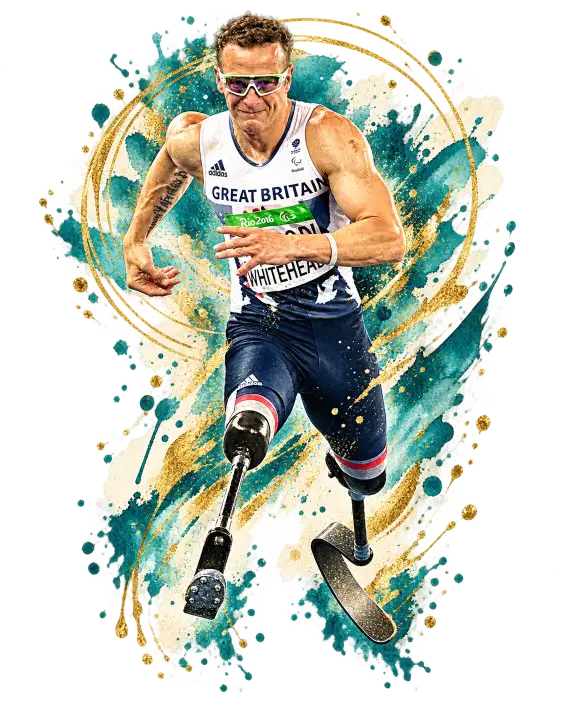
Richard became involved in ice sledge hockey through the Nottingham sporting community.
What began as another sporting opportunity developed into international competition.
Richard became a member of the Great Britain sledge hockey programme.
He was selected for ParalympicsGB at the 2006 Winter Paralympic Games in Turin.
The tournament gave Richard his first experience of the Paralympic environment.
Representing his country increased Richard's appetite to return to the Paralympic stage in an individual event.
With London preparing to host the 2012 Games, his original plan appeared obvious: compete in the marathon.
Classification rules would force a completely different solution.
By the end of the 2000s Richard had established himself as an exceptional amputee marathon runner.
In 2010 he completed the Chicago Marathon in 2:42:52, then recognised as a world best for lower-limb amputee marathon running.
Richard wanted to race the marathon at London 2012.
The classification available at the Games did not provide an eligible marathon event for his impairment category.
Richard challenged the lack of opportunity, but when the classification decision did not change, he faced a practical choice.
He could abandon the home Paralympic dream or change event.
Richard committed himself to sprinting.
The physical demands, training structure, technique and competitive rhythm were completely different.
The reinvention became one of the defining examples of his career: the goal remained; the route changed.
Richard's sprint conversion quickly produced international success.
At the 2011 IPC Athletics World Championships in Christchurch, New Zealand, he won the T42 200m world title.
In the build-up to London he also won European gold and repeatedly lowered the 200m world record.
Richard entered the Olympic Stadium for the T42 200m final in front of a huge home crowd.
His characteristic slow start left him behind early.
Once upright and into full running rhythm, his closing speed transformed the race.
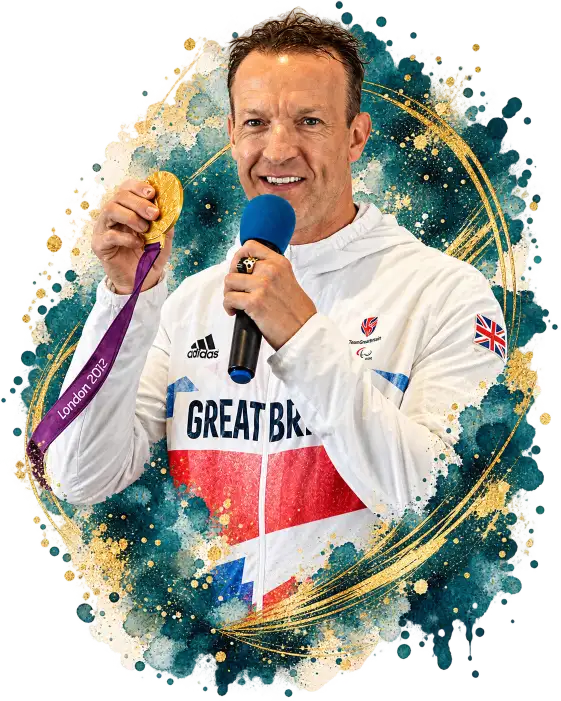
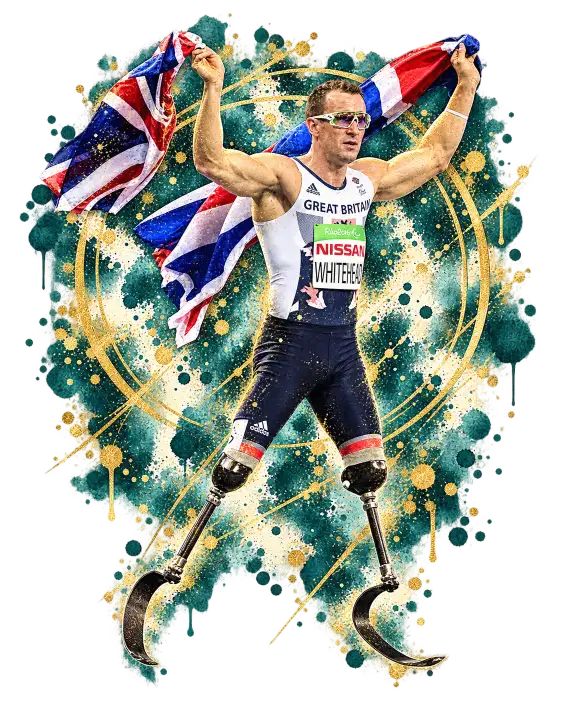
Richard crossed the line first in 24.38 seconds.
It was Paralympic gold and a new world record.
Richard dedicated the victory to his late friend Simon, whose memory had also helped inspire the first marathon eight years earlier.
The win transformed Richard from a respected Para athlete into one of Britain's most recognisable Paralympic figures.
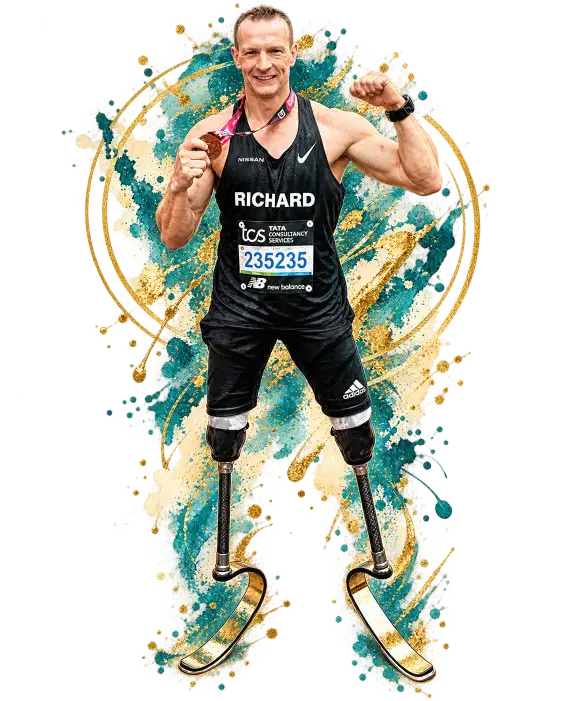
Official ParalympicsGB footage revisits the T42 200m final in which Richard transformed years of marathon endurance and a late switch to sprinting into a London 2012 gold medal.
Watch “Richard Whitehead takes T42 200m gold at London 2012” from ParalympicsGB ↗
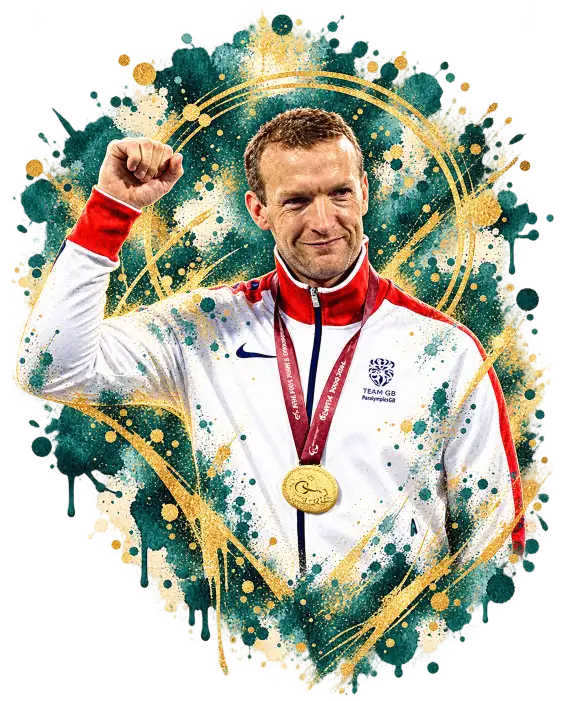
Richard was appointed MBE in the 2013 New Year Honours for services to athletics.
In Lyon he retained his 200m world title.
Rather than moving away from endurance after becoming a sprint champion, Richard returned to it on an extraordinary scale.
Richard attempted to run 40 marathons in 40 days across Great Britain.
The route took him from John O'Groats to Land's End.
He became the first double-leg amputee to run the length of the country.
The challenge raised substantial funds and awareness for Scope and Sarcoma UK.
It also demonstrated something Richard would increasingly emphasise after London 2012: sporting visibility becomes more useful when it creates opportunity or support for somebody else.
Richard won his third World Championship 200m title and produced another world-record performance.
At the 2016 European Championships in Grosseto, Richard won gold in both the 100m and 200m.
Four years after London, Richard successfully defended his Paralympic 200m title.
He also won 100m silver.
Back in the stadium where he had become Paralympic champion, Richard won another World Championship 200m gold and added 100m bronze.
It was his fourth World Championship 200m title.
Richard added another European 200m title.
He won World Championship silver in the T61 200m.
At the delayed Games held in 2021, Richard won T61 200m silver.
Counting Turin 2006, London 2012, Rio 2016 and Tokyo 2020, Richard had now appeared at four Paralympic Games across two different sports.
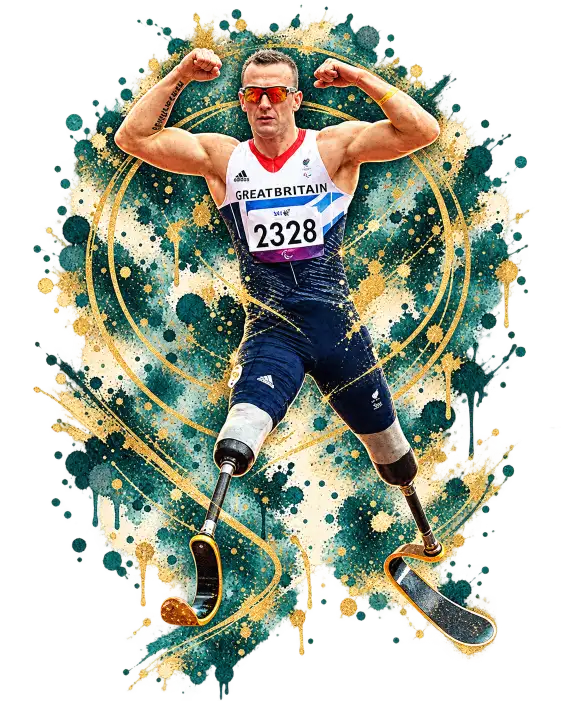
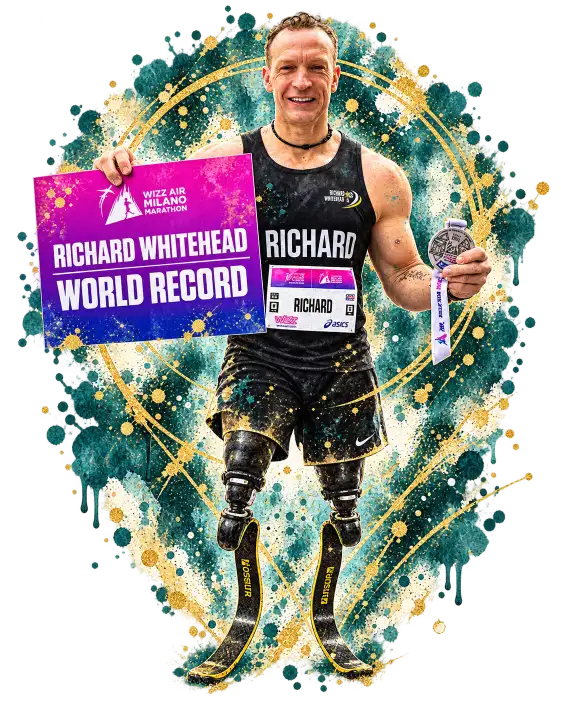
Richard established the Richard Whitehead Foundation in 2021.
He remains its founder and president.
The Foundation exists to enable disabled people's ambitions through sport and physical activity.
Its work focuses on identifying and removing barriers rather than assuming inactivity is caused by lack of motivation.
Foundation activity includes mentoring, information, equipment, accessible opportunities and community projects.
Its current website reports work with more than 3,000 people since 2021.
Richard's approach to inclusion is particularly relevant to organisations.
An inspirational story can unintentionally put all responsibility onto the individual: “If Richard can do it, anybody can.”
His Foundation's work asks the more useful organisational question: what barriers are we responsible for removing?
Richard has spent years speaking publicly about access, representation, equipment, participation and the societal barriers experienced by disabled people.
His advocacy has taken him from schools in Nottinghamshire to international humanitarian and community settings.
Richard has supported initiatives aimed at improving access to running and swimming prostheses for disabled children.
His own history makes that issue personal: specialist running equipment did not become available to him until adulthood.
Richard's current personal profile identifies patron roles with organisations including Sarcoma UK, Footprints Conductive Education Centre and the Ann Craft Trust.
In April 2026 Richard was announced as a Mental Health UK Ambassador.
The role extends his inclusion work into conversations about stigma, mental wellbeing, connection and access to support.
It also reflects a broader theme within Richard's work: high performance is not only physical.
Richard set himself another unusually demanding endurance challenge for 2025: complete twenty marathons during a single year.
The programme took him through marathon events around the world while continuing his Foundation, speaking and advocacy commitments.
Richard returned to the New York City Marathon.
Twenty-one years earlier, New York had been his first marathon.
This time it became his 100th career marathon.
Richard completed the race in 2 hours 57 minutes 46 seconds.
It was his twentieth marathon of 2025.
Richard publicly described the hundredth marathon as an emotional milestone, but not an ending.
The following year would prove that point emphatically.
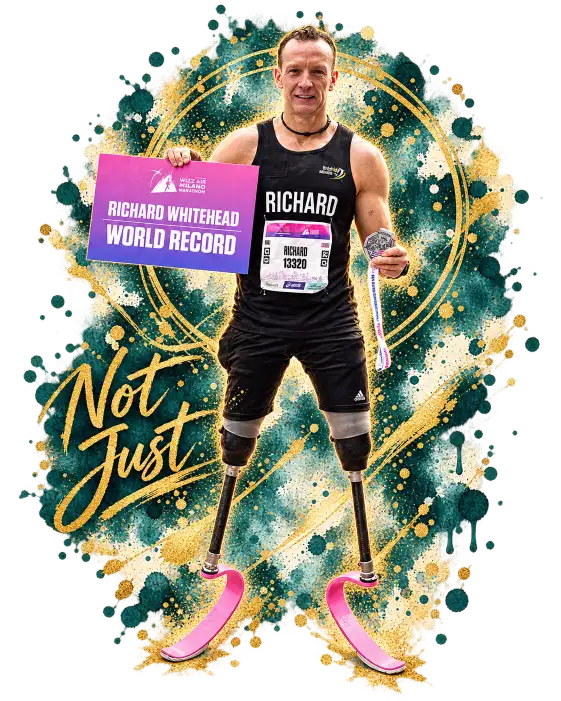
Richard had already returned to world-record marathon form in Chicago in October 2024, running 2:41:36.
At the Wizz Air Milano Marathon, Richard lowered the bilateral-knee-amputee marathon world record to 2:40:47.
It was marathon number 104 of his career.
Only around two weeks later, Richard returned to the start line at the TCS London Marathon.
His body was carrying the cumulative effect of Milan, Boston and an intense racing programme.
He nevertheless finished in 2:40:25.
Guinness World Records recognises the performance as the current fastest men's LA3 marathon.
London Marathon Events identified it as Richard's 106th career marathon.
Immediately after finishing, Richard publicly announced that he wanted one more attempt at the Paralympic Games in Los Angeles in 2028.
That is particularly significant because the story is no longer only one of longevity.
More than two decades after receiving his first running blades, Richard is still setting faster endurance standards and creating new competitive goals.
Richard continues as founder and president of the Foundation carrying his name.
The work increasingly turns his sporting platform into practical opportunities for disabled children and adults.
His 2026 ambassador appointment expands that platform into mental health and stigma reduction.
World records in Milan and London demonstrate that his athletic story remains active.
Richard has publicly identified another Paralympic campaign as a goal.
Doha Marathon's 2026 athlete material also references an LA 2028 Paralympic pathway.
Richard regularly speaks to organisations about resilience, disability inclusion, leadership, performance and the practical meaning of living without limits.
In September 2026 Nottingham City Business Club featured Richard for a session centred on resilience, breaking barriers and living without limits.
Before accepting that something cannot happen, understand whether the limitation belongs to the person or to the system around them.
Richard wanted a Paralympic marathon. When that event was unavailable, he changed distance rather than abandoning the ambition to compete.
Richard regularly emphasises progression rather than waiting for perfect conditions.
Coaches, family, prosthetic specialists, training partners and community have all played a role in achievements that can appear individual from the outside.
Medals and records become more valuable when visibility is converted into access, representation and opportunity.
World titles did not end the challenge. A hundred marathons did not end it either. Ambition can evolve rather than expire.
Challenging inherited assumptions and creating a practical route towards ambitious outcomes.
Moving beyond inspiration and policy towards access, opportunity, participation and genuinely inclusive design.
Responding constructively when circumstances, systems or other people's expectations create obstacles.
Lessons from two Paralympic sports, four world titles and more than one hundred marathons.
Changing event, strategy or method while keeping the deeper goal intact.
Using personal influence to create opportunities that remain useful after the individual leaves the room.
The relationship between movement, connection, confidence, support and sustainable wellbeing.
Recognising which limitations genuinely require adaptation and which exist only because systems have not yet changed.
Maintaining purpose while goals, classifications, events, training methods and life stages evolve.
Why individual achievement is usually supported by a network of expertise, trust and shared commitment.
The importance of seeing people with similar lived experience occupying spaces that once appeared unavailable.
Inclusion becomes credible when organisational choices, investment and everyday behaviour support it.
Richard is born with a double through-knee congenital amputation and grows up around Lowdham.
Begins developing confidence and independence through sport.
Trains in an able-bodied gymnastics environment until approximately fourteen.
Works in sport, education and swimming before becoming a full-time athlete.
The death of his friend and the example set by Terry Fox help inspire a marathon challenge.
Össur fits Richard with specialist running prostheses only thirteen days before New York.
Completes the first marathon of a journey that will eventually pass one hundred races.
Represents Great Britain in sledge hockey at Turin.
Develops with coach Liz Yelling and becomes one of the world's fastest amputee distance runners.
Sets a then world-best marathon performance for lower-limb amputee running.
Changes discipline when his marathon classification is not available for London 2012.
Wins T42 200m gold in Christchurch.
Wins 200m gold while lowering the world record.
Wins the T42 200m Paralympic title in world-record 24.38 seconds.
Appointed Member of the Order of the British Empire for services to athletics.
Retains the global 200m title in Lyon.
Runs from John O'Groats to Land's End for charity.
Wins 200m gold in Doha with another world record.
Wins 100m and 200m European Championship gold.
Defends his 200m Paralympic title and adds 100m silver.
Wins London World Championship 200m gold and 100m bronze.
Wins T61 200m gold in Berlin.
Takes T61 200m silver at the World Championships in Dubai.
Wins T61 200m silver at the delayed Tokyo 2020 Games.
Establishes The Richard Whitehead Foundation.
Runs 2:41:36.
Receives recognition for his long athletics career.
Completes a global twenty-marathon challenge in a single year.
Returns to New York and completes career marathon number 100.
Joins the national charity as an official Ambassador.
Runs marathon number 104 in 2:40:47.
Completes career marathon number 106 in 2:40:25.
Publicly announces his intention to pursue another Paralympic campaign.
Featured by Nottingham City Business Club around resilience, breaking barriers and living without limits.
Combines elite endurance performance, Foundation leadership, inclusion advocacy, mental-health ambassadorship and international speaking.
Richard Whitehead MBE is a British double Paralympic champion, four-time World Champion, marathon world-record holder, former Winter Paralympian, founder of The Richard Whitehead Foundation and international inspirational speaker.
Richard was born with a double through-knee congenital amputation.
Richard is from Nottinghamshire and grew up around Lowdham, near Nottingham.
Sport was part of Richard's childhood from an early age. He began swimming at around four and also participated in gymnastics before later moving into sledge hockey and running.
Richard represented Great Britain in sledge hockey at the 2006 Winter Paralympic Games in Turin.
Richard originally wanted to compete in the marathon at London 2012, but his impairment classification did not have an eligible Paralympic marathon event. He therefore retrained for the T42 200m.
Richard won the T42 200m Paralympic gold medal in a world-record 24.38 seconds.
Richard has won two Paralympic gold medals, both in the 200m: London 2012 and Rio 2016.
Richard is a four-time World Champion in the 200m, winning global titles in 2011, 2013, 2015 and 2017.
In 2013 Richard ran 40 marathons in 40 days from John O'Groats to Land's End, becoming the first double-leg amputee to run the length of Great Britain.
Richard completed his 100th career marathon at the 2025 New York City Marathon. The 2026 London Marathon was identified by organisers as his 106th.
Guinness World Records recognises Richard's 2:40:25 at the 2026 TCS London Marathon as the men's LA3 marathon world record.
Yes. In 2026 Richard broke the marathon world record twice and publicly announced an ambition to pursue another Paralympic campaign towards Los Angeles 2028.
Founded in 2021, The Richard Whitehead Foundation helps disabled people access sport and physical activity through support, mentoring, information, equipment and inclusive opportunities.
Yes. Mental Health UK announced Richard as an official Ambassador in April 2026.
Richard's keynote themes include resilience, disability inclusion, accessibility, high performance, mental wellbeing, adaptability, purpose-driven leadership, breaking barriers and living without limits.
Richard is suited to corporate conferences, leadership events, disability inclusion programmes, high-performance sessions, wellbeing events, sports conferences, awards evenings, school programmes and inspirational events.
Contact The Immersion Project using the contact page or email sue@theimmersionproject.co.uk to discuss availability and event fit.
This profile has been researched using Richard's own current material, Paralympic records, race organisers, charities and recognised sporting sources.
Richard's story is powerful because it does not present inclusion as somebody heroically overcoming every obstacle placed in front of them.
It asks organisations to examine the obstacles themselves.
His journey combines world-class performance with a practical challenge for leaders: what becomes possible when people are given the access, support and expectation to participate fully?
Explore Sports & High-Performance Speakers , discover Corporate Events , view Training Programmes , explore Inspirational Speakers , or browse all speakers .