Nottingham Sports Personality
James's public professional record lists him as Nottingham Sports Personality of the Year in recognition of an international medal-winning season.

Former International Karate Athlete | Two-Time Cancer Survivor | TEDx Speaker | Business Leader | Resilience & High-Performance Speaker
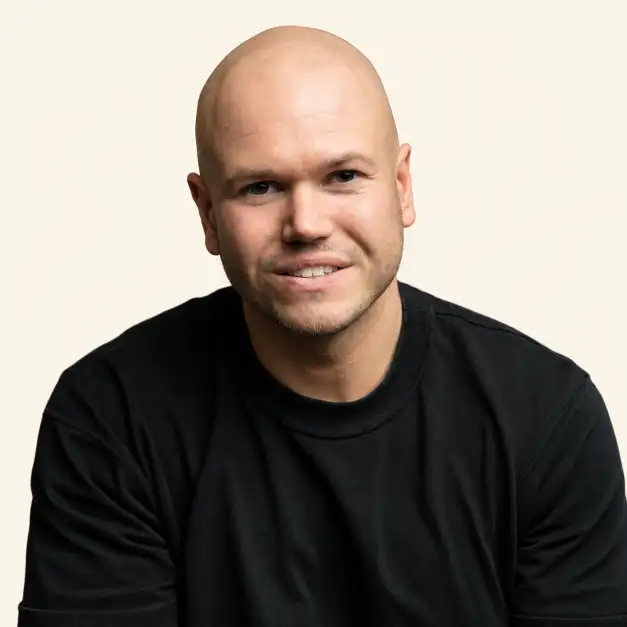
James Wells is a former international karate athlete, multiple world medallist, two-time cancer survivor, entrepreneur, business professional, coach, charity advocate and motivational speaker.
His story moves through elite sport, Acute Myeloid Leukaemia, relapse, chemotherapy, total-body irradiation, a life-saving stem-cell transplant, serious treatment-related complications and an extraordinary return to international competition.
James later carried the same high-performance mindset into coaching, business, media, mentoring and public speaking — including his TEDx talk, The Courage To Be Exceptional.
Reliable public biographies focus primarily on James's teenage and adult sporting career rather than documenting his early childhood in detail. What is clear is that martial arts became a defining part of his identity while he was still young.

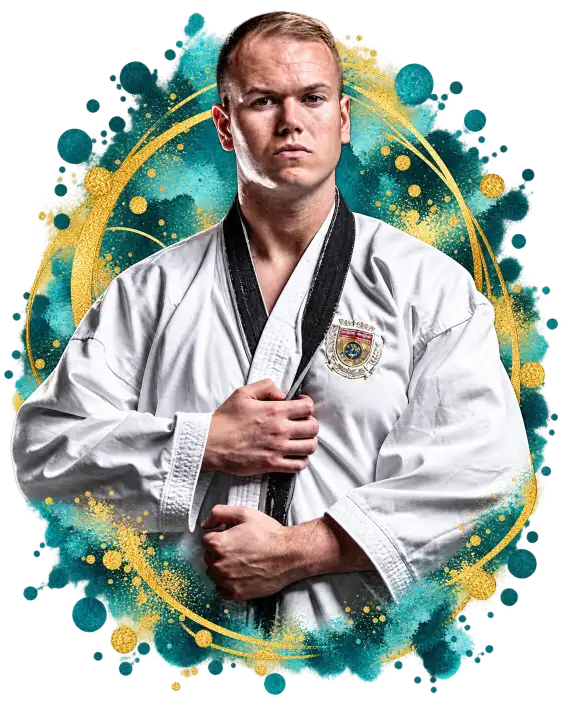
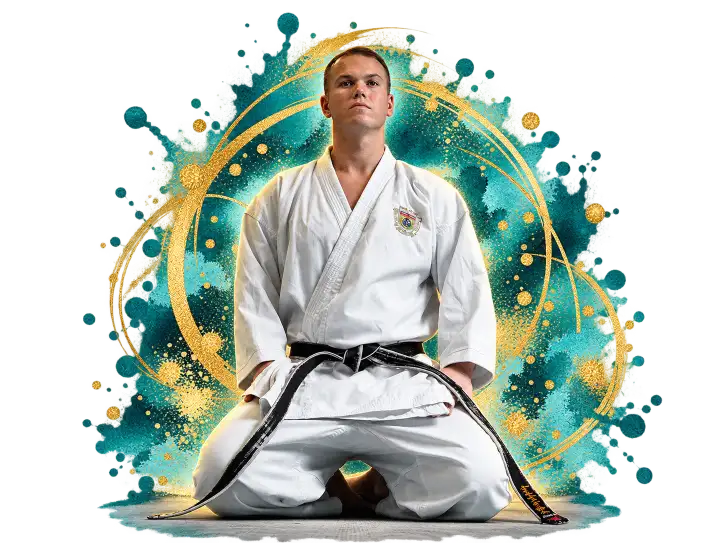
Earlier speaker-profile material records James earning his karate black belt at fifteen, representing England as a teenager and progressing to Great Britain competition while still a young adult.
What followed was a serious international sporting pathway rather than recreational participation.
James competed domestically and internationally, represented England and Great Britain, and developed the physical discipline, competitive focus and mental routines required for high-level martial arts.
Training taught him to break large objectives into repeatable actions: prepare, focus, compete, analyse and return.
Years later, when sport suddenly became far less important than survival, those habits became useful in an entirely different arena.
Alongside elite sport, James studied Broadcast Journalism at Nottingham Trent University.
That combination is important to his later career. Performance taught him discipline; journalism developed communication, storytelling and an ability to translate complex experiences into something an audience could understand.
By the time James was twenty-one, he had sporting ambitions, university work to complete and a future that appeared to have a recognisable direction.
In 2010, that direction changed dramatically.
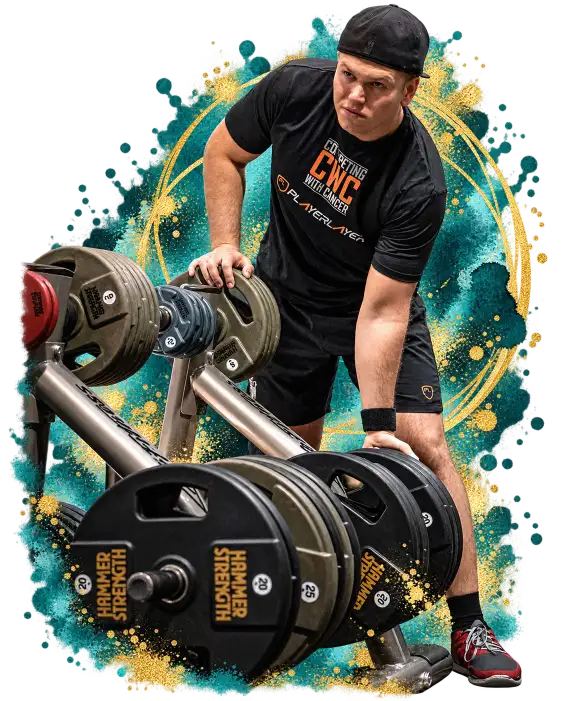
Nottingham Trent University's alumni record states that James was twenty-one when he was diagnosed with Acute Myeloid Leukaemia (AML) while studying Broadcast Journalism.
AML is an aggressive blood cancer, and treatment began quickly.
The structure of James's life changed from karate training, university deadlines and competition to chemotherapy, medical monitoring and long periods in hospital.
Public profiles associated with his TEDx and cancer-awareness work later summarised the full treatment journey as including eleven rounds of chemotherapy, six sessions of total-body radiotherapy and roughly three hundred nights spent in hospital across the wider illness and relapse period.
James has repeatedly explained that sport gave him a useful mental framework: instead of trying to emotionally solve the entire illness at once, he concentrated on the challenge directly in front of him.
Treatment became another process requiring focus, discipline and the willingness to continue when the outcome was uncertain.
Nottingham Trent University records that less than six months after his initial battle with blood cancer, James was representing Great Britain on the international karate stage in Las Vegas.
The return was extraordinary not simply because of the result, but because of what his body had endured immediately beforehand.
That first recovery could easily have become the neat ending to an inspirational story.
Instead, James soon faced something psychologically different: having already endured treatment once, he discovered the disease had returned.
In June 2011, James's Acute Myeloid Leukaemia relapsed.
This time the treatment pathway became even more intensive.
NTU's official biography records another period of intensive chemotherapy followed by total-body irradiation in preparation for a stem-cell transplant.
Treatment also left James dealing with serious physical consequences, including lung damage that created major questions about whether elite competitive sport would ever again be realistic.
A first diagnosis asks whether you can endure something you have never experienced.
A relapse asks whether you can willingly walk back into a process whose difficulty you now understand.
That distinction has become an important part of James's perspective on courage.
James needed a stem-cell transplant.
His younger sister, Rebecca, was tested and proved to be a compatible donor.
James has consistently described the transplant as the intervention that saved his life.
Survival did not instantly restore the athlete who had entered hospital.
The transplant created the possibility of a future. Rehabilitation then required James to work out what he could build inside that future.
The distinction between simply being alive and actively living became central to his later speaking message.

James went back to Nottingham Trent University and completed his Broadcast Journalism degree after his treatment.
His final project, Competing With Cancer, explored how athletes and high-performance sportspeople process traumatic information and how sporting mindset can influence the way somebody approaches serious illness.
Contemporary reporting records the documentary receiving a first-class mark.
The film helped connect three parts of James's identity that would later define his speaking career:
elite performance, lived experience of serious illness and the ability to communicate a difficult subject with clarity.
James returned to high-level martial arts despite the physical consequences of cancer treatment.
TEDx and speaker profiles note that he was back winning international medals within roughly eighteen months of the stem-cell transplant.
James's professional profile records a World Heavyweight Bronze Medal in 2013.
A European heavyweight silver medal followed in 2014.
In 2015 he achieved another World Heavyweight Bronze Medal, together with further European and UK Open podium finishes.
Nottingham Trent University now describes him as a double World Heavyweight Bronze medallist and multiple English and British champion.
James's public professional record lists him as Nottingham Sports Personality of the Year in recognition of an international medal-winning season.
His LinkedIn awards record lists an England Karate Federation High Performance Coach of the Year recognition for developing successful young athletes.
James founded Martial Arts Inspired, creating structured martial-arts programmes designed to develop discipline, confidence and sporting progression in young people.
James's TEDx talk explores adversity, growth mindset, focus, motivation and the idea that ordinary people can find courage when circumstances become extraordinary.
James's speaking work asks audiences to distinguish between the enormous challenge they can see and the smaller decisions they can actually control.
A difficult circumstance does not become easy because somebody thinks positively. What can change is the perspective from which the circumstance is approached.
His TEDx message argues that courage is not an identity possessed by a small group of exceptional people.
It can be a behaviour — something developed through action even when certainty is unavailable.

James's post-sport career expanded into entrepreneurship, sales, business development, executive leadership and growth-focused commercial roles.
Public career profiles record experience across sportswear, health and wellbeing, digital technology, recruitment and consumer products.
Nottingham Trent University records that James helped launch a 24-hour health channel carried on Sky TV during his business career.
His Broadcast Journalism background also led into radio and media work, including hosting his own radio programme.
The same themes recur across sport and business: pressure, targets, leadership, relationships, changing circumstances and maintaining standards when outcomes are uncertain.
James's current public professional profile lists him as an ambassador for Cure Leukaemia, supporting awareness around blood cancer research and access to treatment.
His profile records longstanding inspirational-speaking work with Teenage Cancer Trust, including events attended by hundreds of young people affected by cancer.
James has also been listed as a young-people ambassador, drawing on his own experience to support people navigating cancer at a young age.
Public career information also records patient-support activity, offering young patients an opportunity to talk with somebody who has lived through diagnosis and treatment.
James has maintained his connection with Nottingham Trent University through alumni and student mentoring activity.
Through current cancer-awareness speaking, James also addresses recognising changes in health, seeking professional medical advice, supporting colleagues after diagnosis and understanding the physical and psychological realities of treatment.
In July 2023, Nottingham Trent University recognised James as an Outstanding Alumni Fellow.
The recognition reflected not one single achievement but a career spanning international sport, cancer survival, business, charity, media and public speaking.
Earlier that year, James had returned to the university stage as part of TEDxMaidMarianWay, delivering The Courage To Be Exceptional.
There is a symmetry in that return: the university years in which his original plans were disrupted by cancer eventually became the setting from which he publicly reframed that adversity for other people.
As of September 2026, James's current public LinkedIn profile is associated with Romi ADHD and continues to describe a wider career built around executive leadership, strategy, communication and high-performance environments.
His work as a speaker connects personal adversity with practical organisational themes rather than presenting survival as a simple motivational slogan.
James speaks about resilience, courage, trauma management, pressure, mindset, prioritisation, performance and the difficult conversations that surround serious illness.
Current cancer-awareness programmes also use his story to encourage responsible health awareness and more confident workplace conversations around diagnosis and support.
James's story did not finish when he returned to competition.
The more useful chapter is what followed: deciding how to use the experience across leadership, coaching, business, charity, mentoring and communication.
Enormous uncertainty becomes more manageable when attention returns to the next useful action.
Courage does not require the absence of fear. It can mean acting constructively while fear and uncertainty remain present.
James used the competitive language of sport to organise his response to treatment without pretending that cancer was simply another match.
A crisis can expose the difference between activity that feels urgent and what is genuinely important.
Elite athletes depend on teams. Recovery did too — from family and donors to clinicians, nurses, friends and wider support networks.
Returning to what you did before can be powerful. Building a meaningful future beyond it can be more important.
Moving through extraordinary adversity without reducing resilience to forced positivity.
Understanding courage as something that can be practised through difficult decisions and uncertain situations.
Applying sporting standards around preparation, focus, accountability and consistent action.
Maintaining enough clarity to decide what matters when stress narrows attention.
Looking for learning and agency without denying the seriousness of difficult circumstances.
Creating high-performance environments while understanding that people need trust, communication and support.
Supporting responsible health awareness and better workplace conversations around diagnosis, treatment and recovery.
Why difficult challenges are rarely solved by individual determination alone.
How severe disruption can reshape priorities, ambition and the meaning attached to opportunity.
Develops through competitive karate; earlier profile material records a black belt by fifteen and representative competition soon afterwards.
Progresses into senior national and international martial-arts competition.
Current professional records describe a long period competing internationally for England and Great Britain.
Studies at Nottingham Trent University while pursuing his athletic career.
Diagnosed with Acute Myeloid Leukaemia at twenty-one.
Begins chemotherapy and spends extended periods in hospital.
Returns to international karate competition in Las Vegas after the initial treatment period.
The cancer returns and James re-enters intensive treatment.
Undergoes further chemotherapy and irradiation ahead of a stem-cell transplant.
His younger sister provides the stem cells used for the transplant that James credits with saving his life.
Returns to NTU and completes his Broadcast Journalism studies.
Uses his university documentary project to explore elite sporting mindset and serious illness.
Current professional records list sustained involvement supporting young people affected by cancer.
Records a major world-level medal after the transplant and recovery.
Adds another international podium finish.
Begins longstanding inspirational-speaking work with young people affected by cancer.
Wins another heavyweight world-level bronze medal.
Also records European and UK Open podium finishes during a standout competitive year.
Begins a public ambassadorial relationship that remains listed on his current profile.
His professional profile records Nottingham Sports Personality of the Year.
Founds a coaching organisation designed to inspire young people through martial arts.
Receives a coaching award listed by the England Karate Federation on his professional profile.
NTU records James expanding his martial-arts experience beyond traditional karate into kickboxing and mixed martial arts.
Moves into executive and entrepreneurial roles across sportswear, FMCG, health, digital technology and other sectors.
NTU records James launching a 24-hour health channel on Sky as part of his post-sport career.
Also develops broadcasting experience through his own radio programme.
Delivers The Courage To Be Exceptional at TEDxMaidMarianWay in Nottingham.
Nottingham Trent University recognises his contributions across sport, business, charity and media.
Appears on The Sam Oldham Podcast for a long-form conversation about diagnosis, transplant, recovery, medals and life afterwards.
Continues work across business, speaking, cancer awareness, mentoring and advocacy; his current public profile is associated with Romi ADHD.
James Wells is a former international karate athlete, double world heavyweight bronze medallist, two-time cancer survivor, TEDx speaker, business professional, coach and motivational speaker.
James was diagnosed with Acute Myeloid Leukaemia, commonly abbreviated to AML.
Nottingham Trent University's official alumni material records James as twenty-one when he received his diagnosis in 2010.
Yes. After his initial treatment, his Acute Myeloid Leukaemia relapsed in June 2011, requiring further intensive treatment and a stem-cell transplant.
James's younger sister Rebecca was a compatible donor and provided the stem cells used in his transplant.
Yes. James returned to international martial arts competition and later won major medals, including two World Heavyweight Bronze Medals recorded in his professional and Nottingham Trent University profiles.
His publicly listed achievements include two world heavyweight bronze medals, European silver, UK Open silver and multiple English and British championship honours.
His TEDx talk is titled The Courage To Be Exceptional. It explores courage, adversity, perspective, growth mindset and finding constructive action when circumstances become extremely difficult.
Competing With Cancer was James's university documentary project exploring how elite sporting mindset can influence the psychological response to serious illness and treatment.
Martial Arts Inspired is a martial-arts organisation founded by James in 2016 to help children and adults develop physically and mentally through structured martial-arts training.
His current public professional profile lists longstanding involvement with organisations including Cure Leukaemia, Teenage Cancer Trust and Young Lives vs Cancer, as well as mentoring and patient-support activity.
As of September 2026, James continues to work across business, communication, public speaking, cancer awareness, mentoring and advocacy. His current public professional profile is associated with Romi ADHD.
His core topics include courage, resilience, adversity, high performance, cancer awareness, pressure, leadership, prioritisation, growth mindset, teamwork and perspective.
James is suited to leadership conferences, resilience and wellbeing events, high-performance programmes, cancer-awareness sessions, corporate events, team development, educational events and facilitated Q&As.
Contact The Immersion Project through the contact page or email sue@theimmersionproject.co.uk.
These external references provide further information about James's sporting career, cancer journey, TEDx talk, university recognition, coaching, speaking and current professional activity.
James's story combines elite international sport, life-threatening illness, a stem-cell transplant, world-level comeback, business leadership, coaching, charity and public speaking.
Explore Sports & High-Performance Speakers, discover Corporate Events, view Training Programmes, or browse all speakers.