Know Your Subject
Confidence is more credible when it rests on years of observation, preparation and detail.

Boxing Broadcaster | Journalist | Author | BBC Radio 5 Live | TNT Sports | Storyteller & Event Speaker
Steve “Buncey” Bunce is one of the most recognisable voices in British boxing: a broadcaster, journalist, author, interviewer, commentator, podcast host and live-event storyteller whose professional career began in 1984.
Long before television studios and world-title fights, Steve experienced boxing from inside a gym.
He entered London's famous Fitzroy Lodge Amateur Boxing Club as a child, boxed there as a youngster and later returned to help around the gym.
That foundation matters because his career has never been built solely on observing boxing from a press seat.
Steve understands the gyms, fighters, trainers, journeymen, families, promoters and characters behind the spectacle.
His stories therefore reveal something deeper than results: what pressure does to people, how trust is built, why preparation matters, what ambition costs and why the smallest human detail is often the part audiences remember.
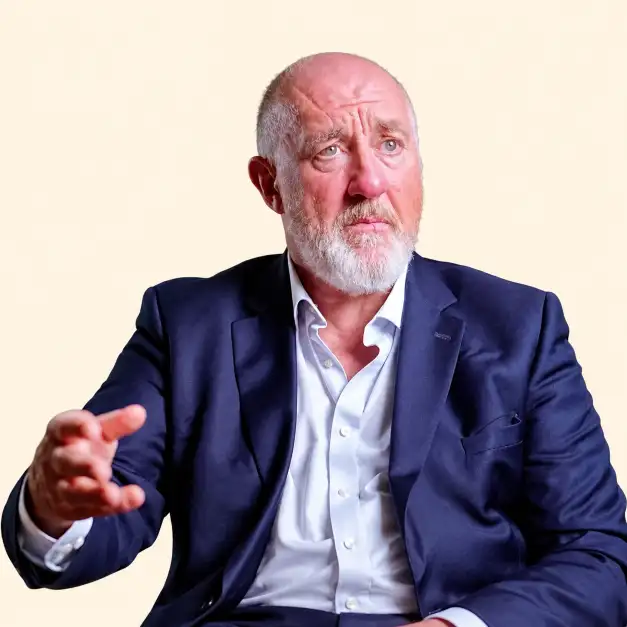

Companies House records Steve Bunce as born in December 1962.
A sufficiently authoritative primary record confirming the exact day of birth was not located during research for this profile, so no specific day has been invented here.
Steve has spoken about his father being an amateur boxer who trained around north London.
His father's stories included London gyms where fighters from African and Caribbean communities trained during the post-war period.
Those stories helped create Steve's fascination not only with fights but with boxing's people, communities and hidden history.
Steve's current publisher biography records him first walking through the doors of the famous Fitzroy Lodge Amateur Boxing Club at approximately ten years old.
In another long-form interview he described boxing there from roughly age eleven until seventeen.
Fitzroy Lodge's historic home beneath railway arches in Lambeth exposed Steve to boxing in its most direct form: old coaches, young fighters, sweat, repetition, discipline and conversations that rarely reached newspapers.
Steve competed as an amateur middleweight.
Years later he returned to the gym environment and has described helping with training and roadwork, including young fighters who later developed their own careers.
Steve's journalism did not begin with boxing as an exotic subject to study from outside.
He already understood the language and rhythm of the gym.
That perspective became central to the way he later reported on fighters: the person before the result.
Steve has recalled living in Finsbury Park in London as a student in 1984 while starting to work for Boxing News and local papers.
This was a completely different media world.
International boxing journalism could not be searched in seconds.
Steve relied on newspapers, magazines, letters, libraries, telephone calls and personal relationships.
He has described having American newspaper columns mailed to him by friends so he could read writers whose work was difficult to obtain in Britain.
One influence was New York boxing writer Phil Berger.
Steve wrote to Berger before eventually meeting him years later during a trip to the United States.
Steve dates his professional boxing-journalism career to 1984.
One of his earliest remembered assignments was covering the semi-finals of what were then called the Junior ABAs in Gloucester for Boxing News.
The regular reporter could not attend, so Steve travelled down with Tony Burns from Repton Boxing Club.
Steve later remembered future professional fighter, trainer and GB coach Robert McCracken appearing on that amateur programme.
Steve spent his early reporting years covering amateur shows.
That meant seeing fighters before fame arrived.
He has recalled covering or watching future names including Nigel Benn, Michael Watson, Naseem Hamed, Joe Calzaghe and Ricky Hatton during early stages of their development.
When somebody remembers the reporter who watched them as a teenager in a small hall, the relationship is very different from meeting for the first time after they become a world champion.
That accumulated trust became one of Steve's greatest professional assets.


Steve's early professional life developed before laptops, broadband and social media transformed ringside reporting.
He has described nights where national newspapers installed landlines and copy had to be dictated during or immediately after rounds.
In recollections from the early 1990s, Steve describes working with more than one telephone while filing copy for different papers around the same fight.
Speed mattered.
Accuracy mattered.
And there was no opportunity to polish the story several hours later after watching replays.
During the 1990s Steve became boxing correspondent at the Daily Telegraph.
His current publisher biography notes his belief that he was the last person hired by a British national newspaper specifically into that type of traditional boxing correspondent role.
Steve began writing for The Independent in 1999 and remains represented there with a current boxing author page and ongoing columns.
The publication that gave Steve some of his earliest work continued to remain part of his career decades later.
His distinctive columns mix current boxing with forgotten fighters, old gyms, strange journeys and characters who rarely appear in conventional sporting histories.
His print and digital writing has also included long associations with Boxing Monthly and contributions to ESPN.
Spending decades around the same sport creates a difficult professional balance.
Relationships create access, but journalism still requires the ability to ask uncomfortable questions and describe what actually happened.
That tension is one of the reasons Steve's stories are especially useful for conversations about trust, credibility and professional judgement.
Steve became closely associated with BBC Radio 5 Live and its boxing coverage.
Publisher biographies record a regular 5 Live boxing show relationship dating back to the 2000s.
The programme evolved into the current 5 Live Boxing with Steve Bunce podcast and radio brand.
The format combines fight previews, post-fight analysis, long-form interviews and discussions with fighters, trainers, promoters and fellow broadcasters.
For years Steve worked alongside legendary BBC boxing commentator Mike Costello.
Their different broadcasting styles became a central part of BBC boxing coverage.
The pair also created the BBC's Greatest Fights series, bringing major fighters back into detailed conversations about historically important bouts.
Steve has also been a regular presence on BBC Radio 5 Live's Fighting Talk, where his personality and ability to think quickly extended his profile beyond boxing-only audiences.
Radio rewards the thing Steve has collected for decades: stories.
A statistic can be read from a screen.
Steve's advantage is remembering the room, the conversation, the hotel, the trainer, the mood and the strange detail surrounding the statistic.
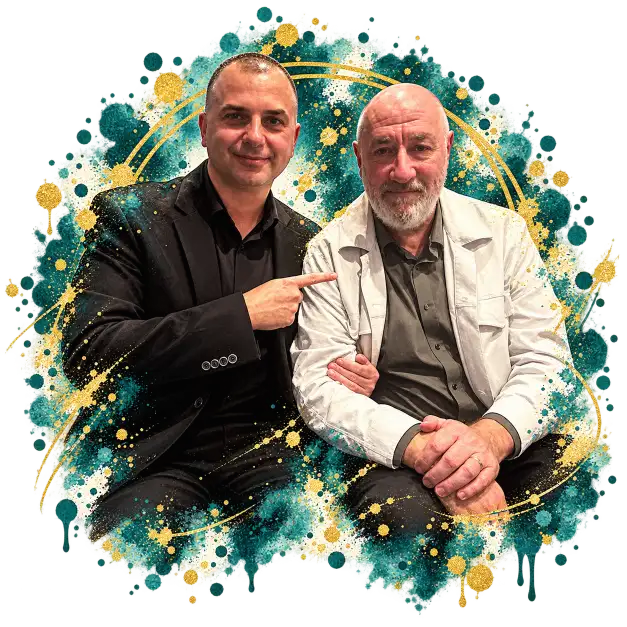
Steve became one of the most recognisable faces of Setanta's boxing coverage.
Steve Bunce's Boxing Hour built a cult audience through interviews, opinions, arguments, fan interaction and the feeling that boxing people were talking directly to boxing people.
Clips from the programme were shared online, discussed on forums and circulated among fans at a time when television content did not naturally spread through social media the way it does today.
Setanta ceased broadcasting in Britain.
Steve suddenly lost the programme that had become heavily associated with his public identity.
Fans created a Bring Back Bunce campaign and the show retained a loyal following after the channel disappeared.
Steve attempted to convert the format into live shows around Britain and Ireland.
He has since written candidly about the road tour's logistical disasters, bad planning, difficult venues and memorable nights.
When dedicated boxing channel BoxNation launched, Bunce's Boxing Hour returned in 2011.
Steve remained closely associated with the channel for several years.
Setanta disappearing is an especially useful career lesson.
Steve did not control the company.
He could only control what he did after the platform disappeared: write more, create new formats, stay visible and keep serving the audience.
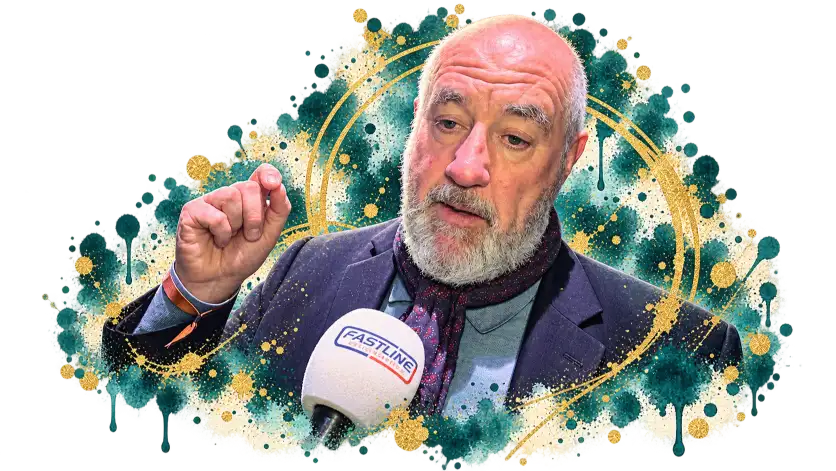
Steve's current publisher biography records coverage of seven Olympic Games.
The Olympics gave him repeated access to fighters before professional fame changed their lives.
The same current biography records Steve reporting on more than sixty fights in Las Vegas.
Vegas became an important part of the boxing world he documented through heavyweight eras, British invasions and global championship nights.
Interviews surrounding Around the World in 80 Fights describe Steve reporting from ringsides in more than thirty countries.
Steve has written extensively about his relationship with New York boxing, including early trips around the old gyms and major Madison Square Garden nights.
His latest memoir moves deliberately beyond the predictable world-title venues.
It includes boxing from makeshift rings, old clubs, forgotten arenas and places where fighters competed far from major television money.
Steve's career repeatedly makes the same point:
elite sport only makes sense when you understand the long journey that existed before the big night.
Boxing naturally creates dramatic headlines: champions, knockouts, rivalries, millions of pounds and giant arenas.
Steve's work consistently returns to the quieter details around those headlines.
A fighter waiting in a dressing room.
A trainer deciding what to say between rounds.
A boxer who has lost an opportunity nobody outside the team knew existed.
Steve has covered careers that ended in celebration and others that ended with injury, financial difficulty, regret or tragedy.
That gives his speaking a useful balance.
He understands ambition without romanticising every part of what ambition demands.
Boxing makes private qualities visible very quickly.
Courage, fear, judgement, ego, loyalty and preparation can all become obvious in a few minutes.
Championship boxing also destroys the myth that high performance is purely individual.
The athlete may stand alone under the lights, but their performance rests on coaches, sparring partners, medical teams, managers and people capable of delivering the right information under pressure.
Steve's access over four decades has depended heavily on relationships.
Those relationships also demonstrate a wider professional truth:
trust takes years to build and can disappear in a single careless moment.
Steve's early book work includes Boxing Greats, an illustrated history of major fighters.
Steve worked with former Commonwealth middleweight champion Michael Watson on the deeply personal account of Watson's career, catastrophic injury against Chris Eubank and extraordinary recovery.
Steve also moved into fiction with The Fixer, a boxing thriller built around the darker and stranger corners of the professional fight business.
Published in 2017 and subsequently updated, Bunce's Big Fat Short History of British Boxing draws heavily on decades of first-hand reporting.
Rather than beginning in distant boxing history Steve begins around 1970, a period he personally remembers from gyms, television and live events.
Steve has explained that even when writing history he wanted urgency in the prose.
He watched old fights, checked specialist boxing annuals and respected writers, then wrote as if filing live copy.
His most autobiographical work, Around the World in 80 Fights, was first published in 2024, with its paperback edition following in 2025.
It uses individual fights and journeys to tell the story of more than four decades inside boxing.
Around the World in 80 Fights was shortlisted for Sports Entertainment Book of the Year at the 2025 Sports Book Awards.
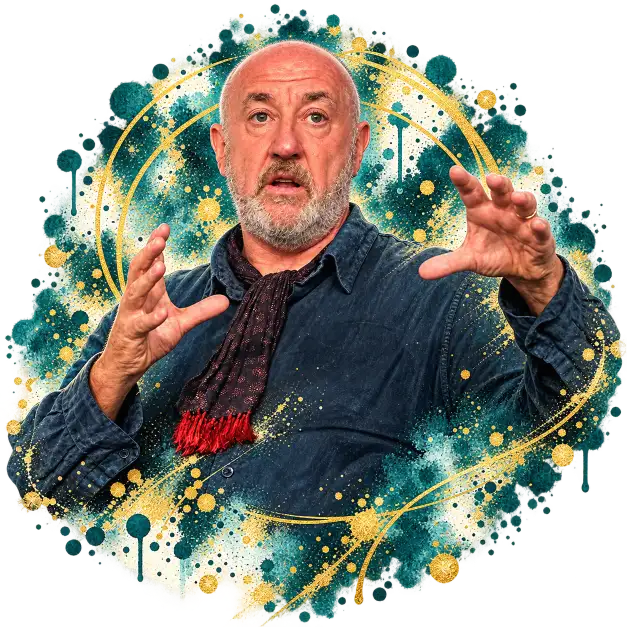
In this long-form interview Steve discusses his route into boxing journalism, the Olympic beat and a lifetime around the fight game.
Watch “Steve Bunce Tells His Story – Boxing, Olympics, Journalism” on YouTube ↗
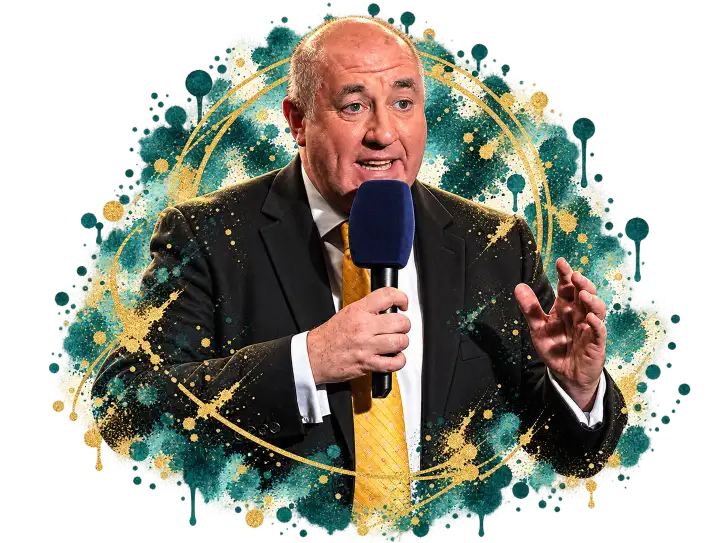
The BBC Radio 5 Live programme remains active in 2026 with Steve continuing to interview major fighters and analyse the sport's biggest stories.
During June 2026 Steve sat down with Anthony Joshua around the former heavyweight champion's return to the ring.
Throughout summer 2026 the podcast continued examining the rapidly changing heavyweight landscape, involving names such as Tyson Fury, Joshua, Moses Itauma, Fabio Wardley and Daniel Dubois.
On 3 September 2026 Steve presented a special programme from Dublin around Katie Taylor's farewell event at Croke Park.
The episode included another Immersion Project speaker, Stacey Copeland, alongside interviews with Taylor's team.
On 13 September the BBC programme analysed Ryan Garcia's victory over Conor Benn in Las Vegas, showing that more than forty years after his first reporting assignment Steve remains connected to current major fight nights.
Steve's current Independent author page continues to carry his analysis of heavyweight boxing, women's boxing and the sport's changing commercial landscape.
He remains closely associated with Boxing News and the distinctive historical and ringside storytelling that has characterised his writing for decades.
His current publisher biography also lists Steve as part of TNT's boxing coverage.
The platforms have changed completely since 1984.
Landline filing became laptops. Newspapers became websites. Television became streaming. Radio became podcasts.
Steve's core product has remained remarkably consistent: know the subject, know the people and tell the story properly.
Confidence is more credible when it rests on years of observation, preparation and detail.
Steve met many future champions before they were famous. Trust built before success can survive pressure that transactional relationships cannot.
Audiences remember people and moments more easily than another list of statistics.
Ringside journalism teaches the discipline of making clear decisions when there is little time and no perfect information.
Newspapers, radio, television, podcasts and books all changed the delivery mechanism without changing the need for strong storytelling.
Four decades inside one industry can create complacency. Steve's work continues to depend on asking another question.
High performance can create extraordinary rewards while simultaneously demanding sacrifice that should not be ignored.
Information earns attention when it is accurate, human, relevant and memorable.
Memorable encounters with fighters, trainers, promoters and characters from more than four decades inside boxing.
What champions, coaches and teams reveal when scrutiny, expectation and consequence arrive simultaneously.
How observation, detail, timing and empathy turn information into a story people remember.
Lessons from relationships built over decades in an industry where access and reputation matter enormously.
Filing live copy, broadcasting after major fights and interviewing emotional people without unlimited preparation time.
What fighters, teams and Steve's own changing media career reveal about rebuilding after disruption.
Remaining relevant as the media world moves from newspapers to television, radio, streaming, podcasts and digital.
Patterns observed across world champions, Olympic fighters, legendary coaches and teams under extreme pressure.
What great trainers understand about trust, timing, instruction and saying the right thing when seconds matter.
A balanced look at what extraordinary goals can give people and what they can demand in return.
How public stories are built, why credibility matters and how one bad moment can alter a reputation.
Steve's broadcasting experience makes him particularly suited to interviews, panels, firesides, sporting dinners and live audience conversations.
Companies House records Steve Bunce as born in December 1962.
First enters the famous south London amateur boxing club.
Boxes at Fitzroy Lodge during his youth.
Learns the sport through gyms, live fights and Boxing News long before becoming a professional reporter.
Starts writing for Boxing News and local newspapers.
Covers the semi-finals in Gloucester in one of his earliest remembered professional assignments.
Spends approximately five or six years covering amateur boxing and future professional stars.
Makes important early reporting trips to the United States and meets writers he had studied from Britain.
Becomes boxing correspondent for the national newspaper.
Covers fighters including Benn, Eubank, Watson, Hamed and Lewis during a transformative era of British boxing.
Publishes early book work celebrating major figures from boxing history.
Begins a long-running association with the newspaper.
Becomes increasingly associated with BBC national radio boxing coverage.
Works with Michael Watson on the story of his career, injury and recovery.
Becomes a familiar contributor to the BBC sports discussion programme.
The television programme develops a cult following among boxing fans.
The channel disappears and Bunce's Boxing Hour ends suddenly.
Takes boxing stories and the Boxing Hour spirit to live venues.
Publishes his boxing thriller.
Bunce's Boxing Hour returns on Britain's dedicated boxing channel.
Steve's radio work evolves increasingly into on-demand boxing podcasting.
Publishes his major history of modern British boxing.
BBC series revisits historic fights with major champions and participants.
Expanded editions keep the story moving into a newer generation.
Current publisher material records Steve's career total at seven Olympics.
Publishes the most autobiographical account of his global life in boxing.
Around the World in 80 Fights is shortlisted for Sports Entertainment Book of the Year.
The memoir reaches a wider paperback audience.
Continues presenting and contributing to major current boxing coverage.
Current publisher biography continues to list Steve as part of TNT boxing coverage.
Presents BBC coverage from Dublin around Taylor's final fight week.
Continues analysing major international fight nights for the BBC.
More than forty years after his first professional assignment, Steve continues writing, broadcasting, interviewing and speaking about boxing.
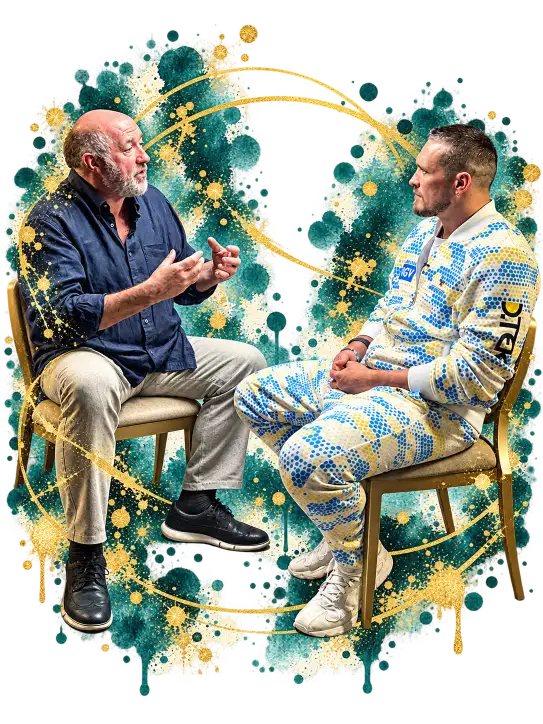
Steve has spent his professional life making complicated sporting situations understandable to an audience.
On stage that translates into a highly conversational style built around real people and real moments.
The stories can be funny, absurd and unpredictable.
They can also move quickly into serious territory: fear, injury, loyalty, grief, ambition and the price of elite performance.
Decades of live broadcasting make Steve particularly useful where an event needs more than a conventional keynote.
He can host panels, interview athletes, moderate conversations, conduct firesides and respond naturally when a live discussion moves away from the original script.
Boxing fans appreciate the depth.
Non-boxing audiences can connect with the universal themes: pressure, trust, preparation, leadership, risk and human character.
The greatest challenge is not finding a story.
It is deciding which story to tell.
Steve Bunce is a British boxing journalist, broadcaster, author, BBC Radio 5 Live presenter and event speaker whose professional career covering boxing began in 1984.
“Buncey” is the nickname by which Steve has become widely known throughout British boxing and broadcasting.
Companies House records Steve Bunce's birth month as December 1962. This profile does not state an exact day because a sufficiently authoritative primary record for it was not verified during research.
Yes. Steve has described boxing as an amateur at Fitzroy Lodge in south London from approximately age eleven to seventeen.
Steve's formative boxing club was Fitzroy Lodge Amateur Boxing Club in London.
Steve dates his professional journalism career to 1984, when he began working around Boxing News, local newspapers and amateur boxing.
He has recalled covering Junior ABA semi-finals in Gloucester for Boxing News in 1984, with future fighter and trainer Robert McCracken among the young boxers on the bill.
His career has included the Daily Telegraph, The Independent and numerous other newspapers and specialist boxing publications.
Yes. He remains closely associated with BBC Radio 5 Live and the current 5 Live Boxing with Steve Bunce programme.
Steve Bunce's Boxing Hour was his cult boxing television discussion show, first strongly associated with Setanta Sports and later revived on BoxNation.
His current publisher biography records seven Olympic Games.
Current publisher material states that Steve has reported on more than sixty fights in Las Vegas.
His books include Boxing Greats, Michael Watson's Story, The Fixer, Bunce's Big Fat Short History of British Boxing and Around the World in 80 Fights.
It is Steve's autobiographical journey through more than four decades of global boxing, told through fights, people, places and experiences from famous and obscure corners of the sport.
It was shortlisted for Sports Entertainment Book of the Year at the 2025 Sports Book Awards.
Steve speaks about boxing, storytelling, pressure, high performance, communication, trust, resilience, leadership, media, reputation and the human reality behind elite sporting moments.
His decades of live radio and television interviewing make him particularly suitable for panels, fireside discussions, live interviews, sporting dinners and moderated conversations as well as keynote speaking.
Steve is suited to corporate conferences, sporting events, leadership programmes, after-dinner events, media and communication sessions, client entertainment, awards evenings and fireside conversations.
Contact The Immersion Project through the contact page or email sue@theimmersionproject.co.uk .
This profile uses current publisher information, Steve's own interviews and writing, BBC material, book records and specialist boxing sources rather than relying on a single biography.
Steve does not need to manufacture a business parable and then force boxing into it.
He has spent more than forty years watching real people make decisions under extreme pressure.
His stories naturally lead into questions about leadership, trust, communication, resilience, reputation, preparation and the price of ambition.
Explore Sports & High-Performance Speakers , discover Corporate Events , view Training Programmes , explore Inspirational Speakers , or browse all speakers .